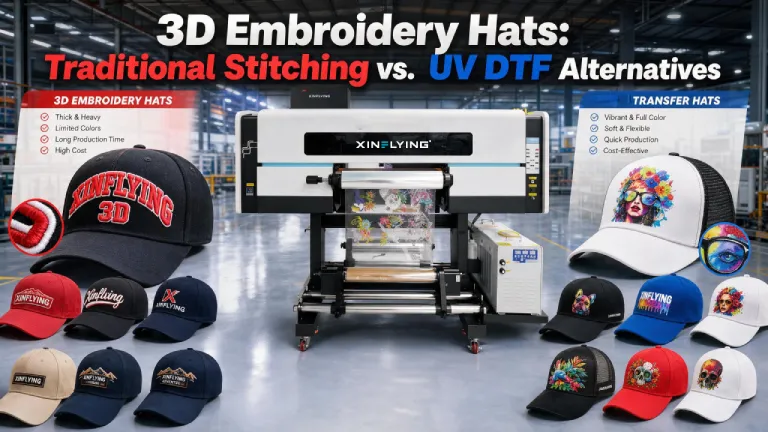
“3D embroidery hats” usually brings up two very different technologies once you start researching equipment: traditional needle-based puff embroidery machines, and newer UV DTF printers that simulate a raised embroidery look with ink instead of thread. This guide explains both honestly, so you can tell which one actually fits your hat business.
What Is 3D Embroidery on Hats?
“3D” or “puff” embroidery refers to a raised, textured design on a hat or cap, giving letters and logos a dimensional, popped-out appearance instead of lying flat against the fabric. There are two distinct ways businesses achieve this look today, and they work very differently:
- Traditional puff embroidery: a foam underlay is placed beneath the stitching area, and a needle-based embroidery machine stitches thread over the foam, compressing and shaping it into a raised design.
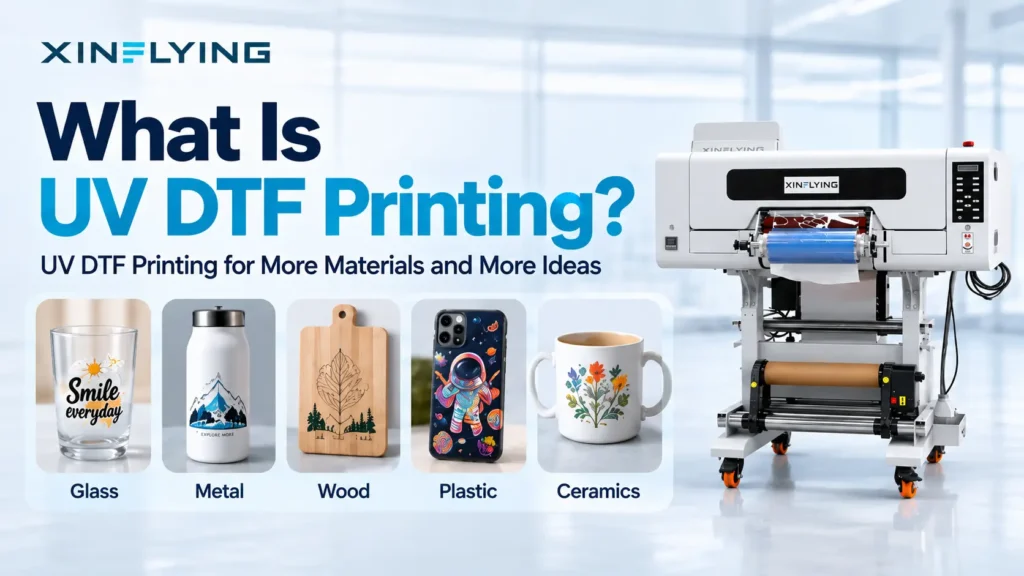
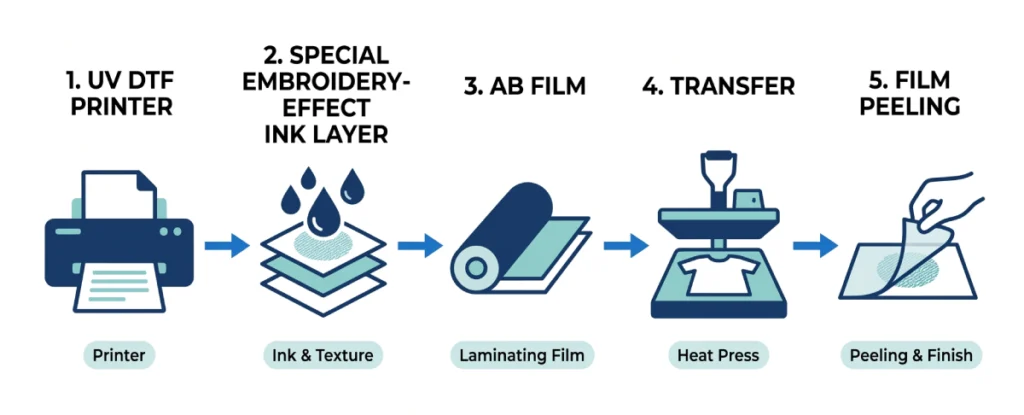
- UV DTF 3D embroidery printing: a UV DTF printer builds up layers of white ink, color ink, and varnish on a transfer film to create a textured, embroidery-like surface, which is then applied to the hat as a printed transfer rather than stitched thread.
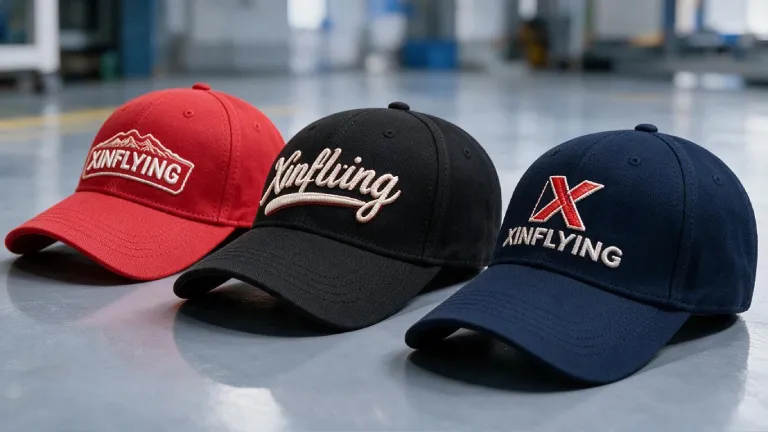
How Traditional Needle-Based 3D Puff Embroidery Works
- A design is digitized into a stitch file specifically for puff embroidery, accounting for foam placement and stitch density.
- Foam underlay is positioned on the hat in the design area.
- A multi-needle embroidery machine stitches the design, compressing the foam into a raised shape as it sews.
- Excess foam is trimmed away, leaving only the raised, stitched design.
Hats present specific challenges for this method: limited embroidery space, an unstable curved surface, and seams that can distort stitching — which is why hat-specific embroidery machines with dedicated cap frames exist separately from flat-good embroidery machines.
How UV DTF 3D Embroidery Printing Works
UV DTF 3D embroidery is a newer approach that doesn’t involve thread at all. Instead, a UV DTF printer — like Xinflying’s UV DTF 3D Embroidery Printer 600S— layers CMYK ink, white ink, and UV varnish onto a transfer film to build up a textured, dimensional surface. Once printed, the design is applied to the hat similarly to a UV DTF sticker: pressed on, with no stitching, digitizing into stitch files, or foam underlay required.
- Because it’s a printed process, full-color designs, gradients, and fine detail are all straightforward to reproduce.
- Setup per design has no per-color cost, unlike thread changes on an embroidery machine.
- The hat’s curved surface is less of an obstacle than it is for stitching, since the design is applied as a flexible transfer.
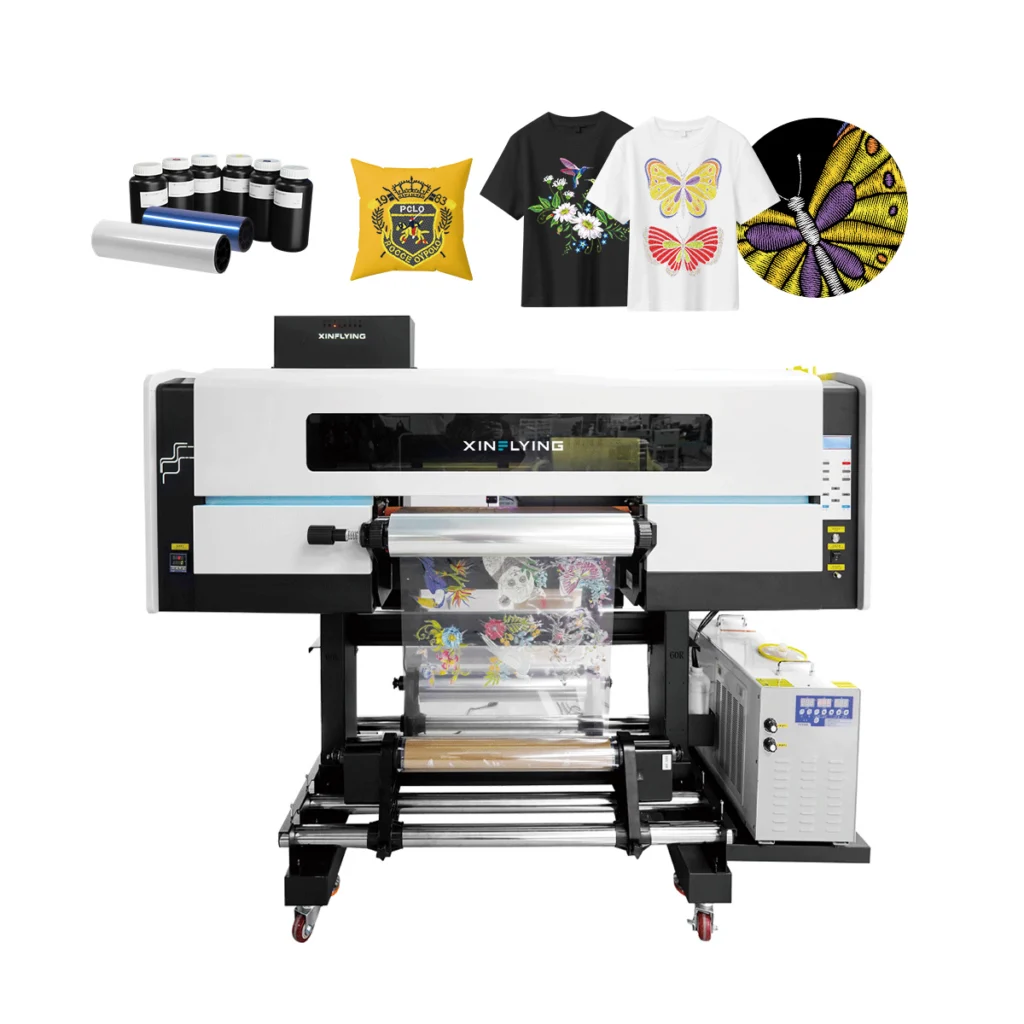
Xinflying UV Printer Machine-600s
The Xinflying UV Printer Machine-600s is a next-generation integrated printer combining 3D simulated embroidery with DTF (Direct to Film) printing technology.
Comparing the Two Methods
- Startup cost: Multi-needle embroidery machines are typically a larger upfront investment than a UV DTF printer of comparable production capacity.
- Design complexity: UV DTF 3D embroidery handles full-color, photo-quality designs more easily; traditional embroidery is limited by thread colors and stitch density.
- Turnaround: UV DTF transfers can be printed and applied faster per design, since there’s no digitizing step into a stitch file.
- Perceived value: Traditional thread embroidery is often perceived as a more premium, established finish for branded corporate or team merchandise.
- Durability: Thread embroidery has decades of proven wash and wear performance; UV DTF 3D embroidery durability depends on ink and adhesive quality and is a newer technology by comparison.
Which Method Fits Your Hat Business?
If your business is built around premium branded merchandise, corporate uniforms, or team apparel where a traditional embroidered look is expected, a needle-based embroidery machine remains the established choice. If you’re running a print-on-demand or custom gift business that needs fast turnaround, full-color designs, and lower equipment cost to get started, UV DTF 3D embroidery printing is worth testing as a faster-to-market alternative.
For businesses exploring the UV DTF route, the XF-600S 3D Embroidery & UV DTF Integrated Printer combines 3D embroidery-style texture printing with standard DTF printing on one 24-inch machine, making it possible to offer both finishes without two separate pieces of equipment.
Frequently Asked Questions
No, and it’s important to be clear about the difference. Traditional 3D puff embroidery uses thread and a foam underlay stitched by a needle-based machine, creating a raised design made of actual fabric fibers. UV DTF 3D embroidery is a printed transfer that uses layered UV ink to simulate a similar raised, textured look, applied to the hat rather than stitched into it.
Traditional thread embroidery is generally considered more durable over the long term, since it’s physically woven into the fabric and has decades of proven wash and wear performance. UV DTF 3D embroidery is newer, and durability depends on the ink, adhesive quality, and application, so testing on your specific hat material is recommended.
UV DTF 3D embroidery typically has a lower equipment cost and footprint, doesn’t require digitizing designs into stitch files, and can reproduce full-color gradients and photo-quality detail that would be difficult or impossible with thread. It’s often a faster way to test designs or fulfill smaller custom orders.
Yes, since it’s a printed process using CMYK plus white and varnish ink layers, UV DTF 3D embroidery can reproduce full-color designs and gradients that would require many thread color changes on a traditional embroidery machine.
Yes, since it’s a printed process using CMYK plus white and varnish ink layers, UV DTF 3D embroidery can reproduce full-color designs and gradients that would require many thread color changes on a traditional embroidery machine.
Related Resources
External reference — Embroidery — Wikipedia