If you’ve been researching custom printing options, you’ve probably come across the term “DTF printer.” It’s one of the fastest-growing technologies in the garment decoration industry — but what exactly is it, and how does it work?
This guide answers all the basics: what a DTF printer machine is, what it does, and whether it’s the right choice for your needs.
What Does DTF Stand For?
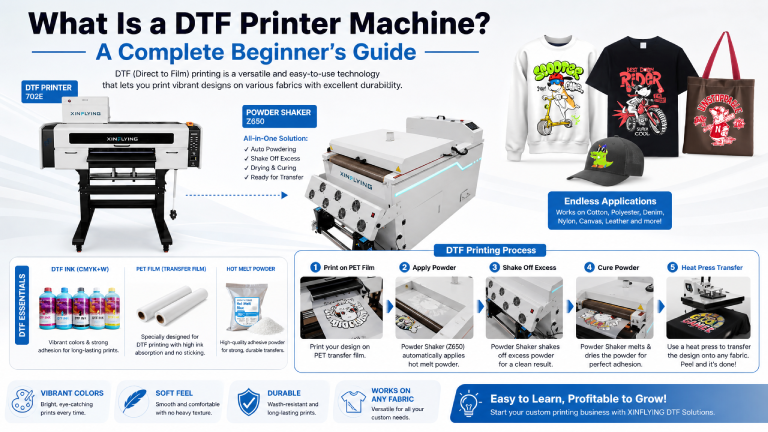
DTF stands for Direct-to-Film. It refers to a printing process in which a design is printed directly onto a special PET (polyethylene terephthalate) film, coated with adhesive, and then heat-transferred onto a fabric or other substrate.
The name describes exactly what happens in the first step of the process: the ink goes directly onto the film, not onto the fabric itself.
What Is a DTF Printer Machine?
A DTF printer machine is a modified inkjet printer designed to print onto PET transfer film using specialized water-based textile inks. These inks include CMYK colors plus a white ink channel that is essential for printing onto dark fabrics.
The machine looks similar to a wide-format inkjet printer but is engineered to handle the unique requirements of DTF printing: thick film media, multiple ink layers, and precise registration for white underbase printing.
| Key Fact: A DTF printer is not a standalone device. It works as part of a complete DTF system that includes a powder applicator, curing oven, and heat press. Together, these components produce the finished garment print. |
How Is DTF Different From Other Printers?
| Printer Type | Prints Directly On | Requires Heat Press | Dark Fabrics |
| DTF Printer | PET Transfer Film | Yes (to apply transfer) | Yes |
| DTG Printer | Garment directly | No (uses conveyor dryer) | Yes (pretreatment needed) |
| Sublimation Printer | Sublimation paper | Yes | No (light only) |
| Screen Printing | Screen (onto garment) | No | Yes |
Key Components of a DTF Printer Machine
Print Heads
DTF printers typically use Epson DX5, DX7, I3200, or similar piezoelectric print heads known for their precision and reliability with water-based inks. The number and type of print heads affect speed and output quality.
Ink System
DTF printers use 4–6 ink channels: Cyan, Magenta, Yellow, Black (CMYK), and one or two White channels. The white ink is printed as a base layer or top layer depending on the workflow, enabling prints on dark substrates.
Media Feed System
The machine feeds PET film (typically 0.075mm–0.1mm thick) through the print zone. Most commercial DTF printers use roll-to-roll feeding for continuous production.
What Does a Complete DTF System Include?
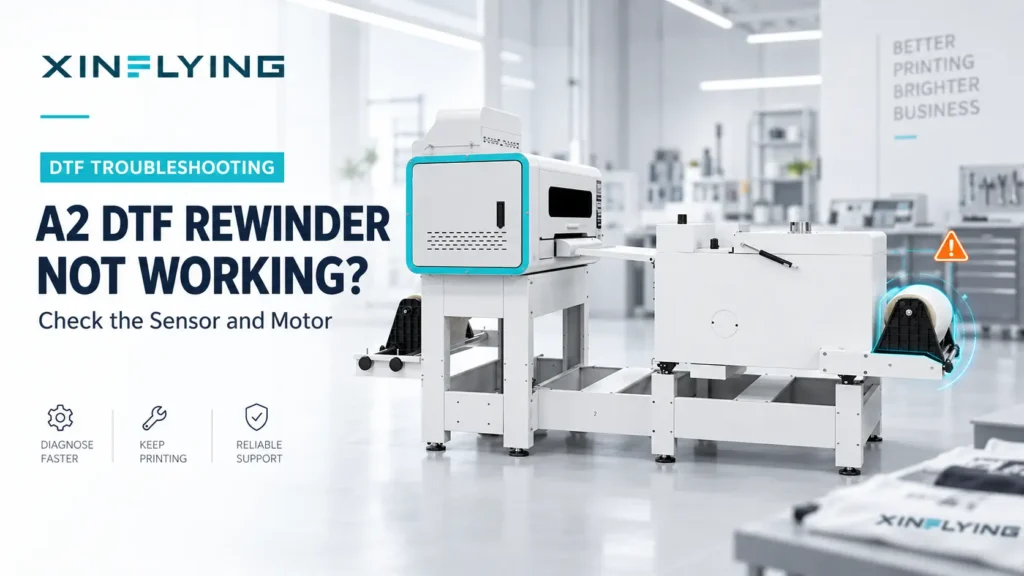
- DTF Printer — prints the design onto PET film
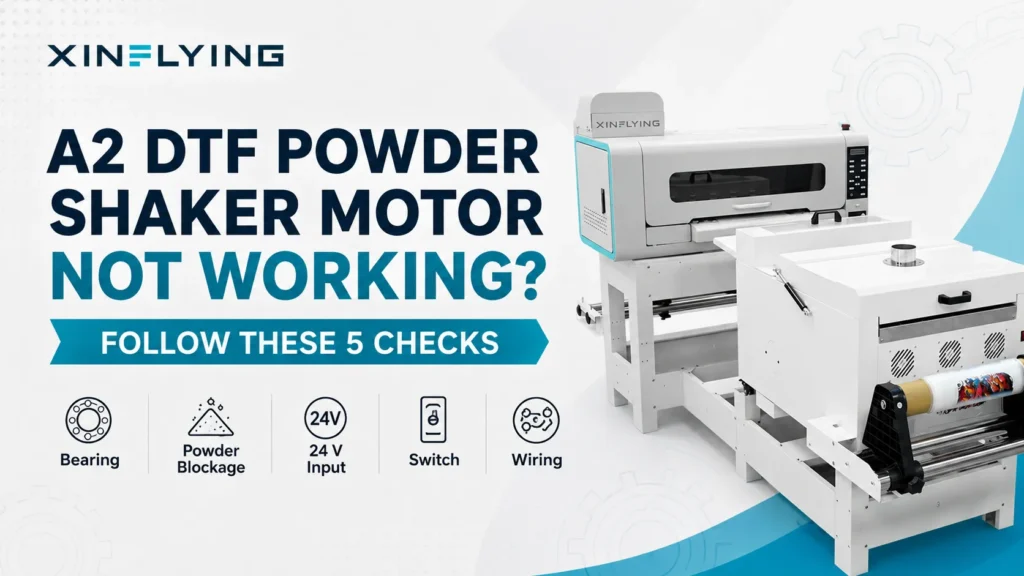
- Powder Shaker/Applicator — evenly coats the wet ink with hot-melt adhesive powder
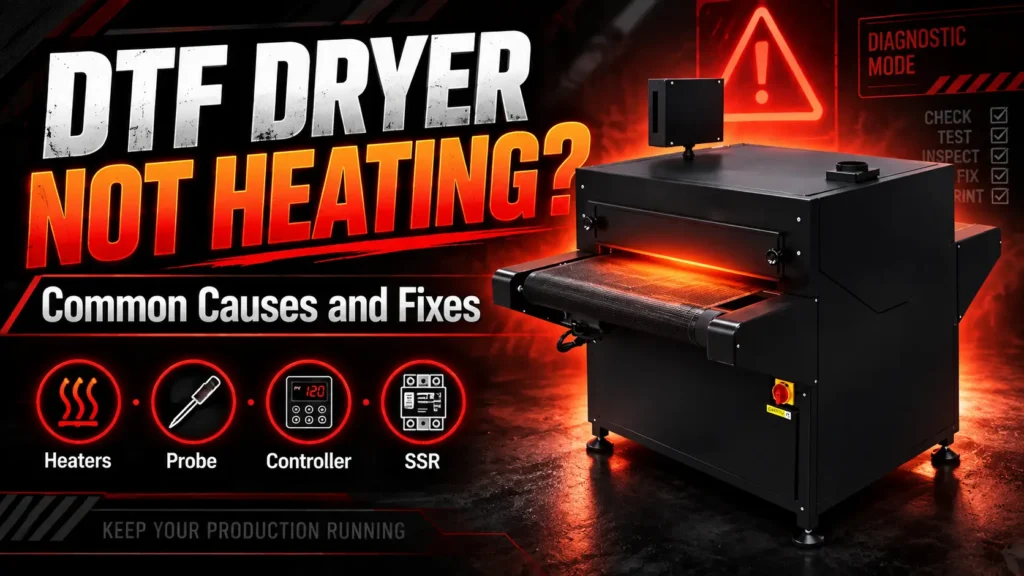
- Curing Oven or Tunnel Dryer — melts the powder to bond it to the ink
- Heat Press — transfers the finished film onto the garment
What Can a DTF Printer Print On?
One of DTF’s greatest advantages is substrate versatility. Unlike sublimation (polyester only) or screen printing (setup costs per design), DTF works on:
- 100% cotton (the most common fabric for DTF)
- 100% polyester and polyester blends
- Nylon, rayon, denim, canvas, and more
- Dark and light fabrics with equal quality
- Hats, bags, shoes, socks, and other accessories
What Are the Advantages of a DTF Printer Machine?
- No minimum order — print 1 or 1,000 pieces at the same per-unit process
- Full-color printing at flat cost regardless of color complexity
- Works on any fabric color without special preparation
- Fast setup — no screens, plates, or lengthy prepress work
- High-resolution output — typically 1200–1440 DPI for fine detail
- Flexible, soft hand feel on finished garments
What Are the Limitations?
- Requires multiple pieces of equipment (not just the printer)
- White ink requires regular maintenance and agitation to prevent clogging
- Not ideal for very textured or heavily coated fabrics
- Transfer must be applied within a reasonable time frame for best results
How Much Does a DTF Printer Machine Cost?
| Tier | Price Range | Typical Use |
| Entry-Level | $3,000–$8,000 | Small home business or startup |
| Mid-Range | $8,000–$20,000 | Growing small business / print shop |
| Commercial | $20,000–$50,000+ | High-volume print shop |
Frequently Asked Questions
Do I need any experience to use a DTF printer machine?
Basic computer and printing knowledge is helpful but not required. Most manufacturers provide training, and the DTF workflow is simpler to learn than screen printing. Beginners typically reach production proficiency within a few days.
Can a DTF printer print on paper or other non-fabric surfaces?
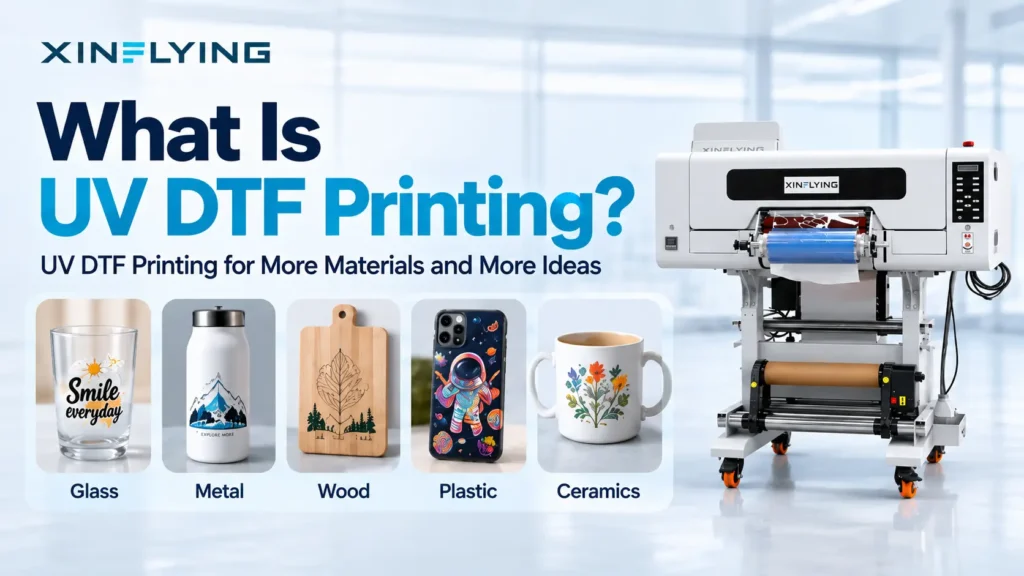
DTF printers are designed for PET transfer film, not paper or rigid substrates. For hard surfaces, UV DTF printing is the appropriate technology. Standard DTF is optimized for fabric applications via heat transfer.
How long does a DTF printer machine last?
With proper maintenance — daily head cleaning, ink agitation, and temperature control — a quality DTF printer can operate reliably for 3–5 years or more. Print head replacement is the most common maintenance expense.
Is a DTF printer the same as a sublimation printer?
No. A sublimation printer prints onto sublimation paper and transfers color into polyester fibers using heat. A DTF printer prints onto PET film and transfers a full ink layer onto virtually any fabric using heat and adhesive. DTF is far more fabric-versatile than sublimation.
Final Thoughts
A DTF printer machine is a powerful, versatile tool for anyone in the custom apparel or promotional products industry. Whether you’re a home-based entrepreneur or a commercial print shop looking to expand, DTF offers an accessible, scalable entry point into high-quality garment decoration.