DTF and dye sublimation are both digital decoration methods, but they solve different production problems. The better choice depends mainly on what you want to print, what materials you work with, and what type of product business you are building.
Choose DTF when you need flexible garment decoration across cotton, polyester, blends, and many other textiles. Choose dye sublimation when polyester fabrics, coated blanks, all-over color, soft signage, home textiles, or sportswear are central to your business.
Neither technology is universally better. The right choice is the one that matches your material, product range, and production workflow.
The Core Difference: How the Image Becomes Part of the Product
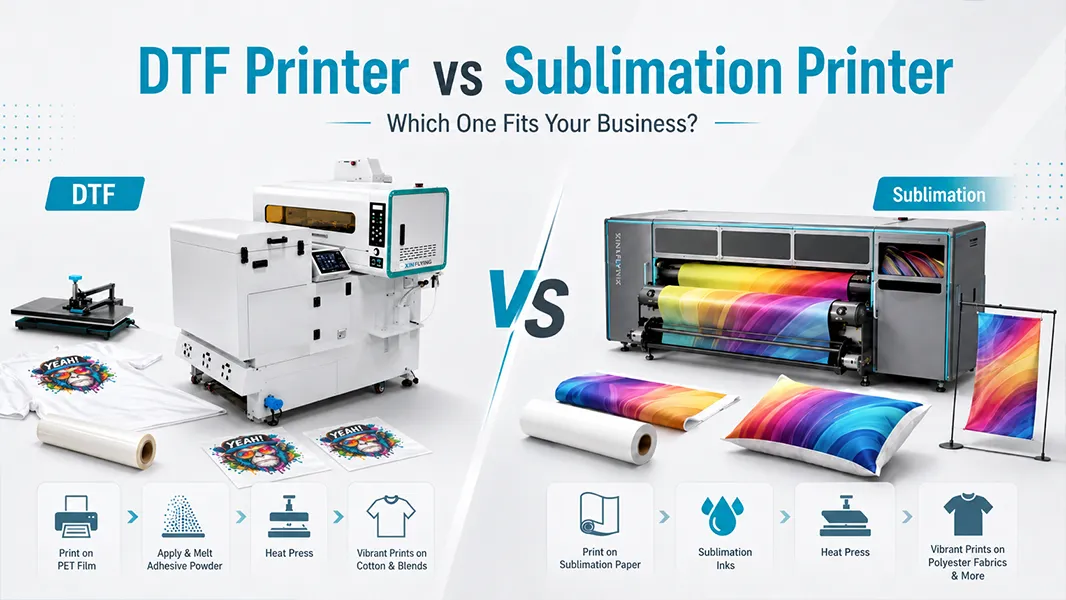
DTF printing creates a transfer on PET film. Color and white ink are printed, adhesive powder is applied and cured, and the transfer is heat-pressed onto the garment. The finished image sits on the surface of the textile as a flexible printed transfer.
Dye sublimation prints a mirror-image design on sublimation paper. Under heat and pressure, sublimation dye turns into gas and bonds with polyester fibers or a compatible polymer coating. The image becomes part of the coated surface rather than sitting on top of it.
This difference explains most of the practical trade-offs.
DTF vs Sublimation at a Glance
Materials
DTF is commonly used for cotton, polyester, blends, and a broad range of apparel and textile applications. It is especially useful when one shop must decorate different garment types without changing printing technology.
Sublimation works best on polyester textiles and products with a polyester-compatible coating. It is not the right technology for standard cotton shirts or dark, uncoated garments.
White ink
DTF uses white ink, which makes it capable of producing bright graphics on black and dark garments. White ink also adds maintenance requirements, including circulation, nozzle checks, and a stable operating routine.
Sublimation does not print white. The base color of the product becomes the white and light areas of the design. This makes sublimation ideal for white or light polyester goods, but less suitable for dark substrates.
Feel and finish
A properly made DTF transfer can be flexible and durable, but it remains a transfer layer on the fabric. The feel varies with artwork coverage, white ink, powder, curing, and pressing conditions.
Sublimation can create an exceptionally soft result on suitable polyester because the dye is embedded into the fibers or coating. It is particularly strong for large, colorful designs that need to remain breathable on performance fabrics.
Product range
DTF is often the better fit for custom shirts, hoodies, workwear, mixed-fabric apparel, branded merchandise, and short-run transfer orders.
Sublimation is often the better fit for sportswear, polyester apparel, flags, soft signage, custom home textiles, photo panels, coated drinkware, and other polymer-coated blanks.
When DTF Is the Better Choice
DTF is usually the stronger option when your business needs flexibility across common apparel materials. It is particularly useful for:
- Custom T-shirts and hoodies in cotton or blends.
- Dark garments that require white underbase coverage.
- Small-batch custom apparel and print-on-demand work.
- Gang-sheet production for logos, left chest prints, sleeve graphics, and mixed customer orders.
- Shops that want to produce transfers for later pressing or resale.
When Dye Sublimation Printer Is the Better Choice
Dye sublimation is usually the better choice when your product line is built around polyester or coated goods. It excels when the design needs broad, vibrant coverage without a heavy hand feel.
Typical applications include:
- Polyester sportswear and team uniforms.
- All-over print garments and cut-and-sew textile work.
- Flags, banners, and soft signage.
- Dye Sublimation Printer for Home Textiles can products such as cushions, curtains, and decorative fabrics.
- Polyester-coated gifts and hard blanks.
DTF Printer vs Sublimation Printer: Workflow Comparison
DTF workflow
- Prepare artwork in RIP.
- Print color and white layers on DTF PET film.
- Apply hot-melt adhesive powder.
- Cure the powder.
- Cut or trim the transfer.
- Heat press the transfer onto the garment.
- Peel according to the film instructions and finish-press when required.
The critical controls are white ink condition, film compatibility, powder coverage, curing, press pressure, and peel timing.
Sublimation workflow
- Prepare the artwork in RIP and mirror it for the transfer process.
- Print with sublimation ink onto sublimation paper.
- Position the paper on a compatible polyester or coated blank.
- Heat press or calendar-transfer using the required profile.
- Remove the paper and inspect color, transfer completeness, and substrate handling.
The critical controls are substrate compatibility, paper/ink profile, heat transfer conditions, pressure, and color management.
Color, Durability, and Production Expectations
Both technologies can produce strong results, but they should be judged differently.
For DTF, test adhesion and stretch behavior on the actual garment. A transfer must be cured correctly and pressed with the right combination of time, temperature, and pressure. Large solid graphics may feel heavier than a smaller chest logo, so the artwork itself is part of the product decision.
For sublimation, test color on the actual polyester fabric or coated blank. The final result depends heavily on the substrate, heat behavior, and color profile. Because white ink is not used, your product color becomes part of the design system.
In both cases, a real wash test or use test is more meaningful than a first visual impression.
Business Models: Which Technology Fits Which Shop?
Choose DTF if your business mainly sells:
- Custom cotton tees and hoodies.
- Mixed garment orders.
- Small-run brand merchandise.
- Corporate apparel, club clothing, and event shirts.
- Transfer gang sheets to other decorators.
Choose sublimation if your business mainly sells:
- Polyester sportswear and performance apparel.
- All-over textile prints.
- Flags, banners, and fabric displays.
- Textiles and decorative fabrics.
- Coated promotional products and photo gifts.
Consider both if your business serves different markets
A shop that sells cotton streetwear and polyester teamwear may benefit from offering both technologies over time. Start with the technology that serves your current revenue, then expand when the product range and staffing can support a second workflow.
Where Does DTG Fit In?
Direct-to-garment printing is another option for businesses focused on printing directly onto cotton-rich garments. Rather than producing a transfer, a DTG printer prints directly onto the shirt. It can be a good fit for on-demand garment decoration, particularly when the business values a direct print workflow and has a suitable pretreatment process.
A Simple Decision Tree
- Need to print on cotton, blends, and dark garments? Start with DTF.
- Need to print full-color polyester sportswear or home textiles? Start with sublimation.
- Need vibrant graphics on coated hard blanks? Sublimation may fit if the blank is coated; UV DTF or UV printing may be more suitable for other hard-surface applications.
- Need direct printing on cotton-rich shirts without transfers? Consider DTG.
FAQ: DTF Printer vs Sublimation Printer
Is DTF better than sublimation for T-shirts?
For cotton and mixed-fabric T-shirts, DTF is usually the more flexible option. For white or light polyester shirts, especially sportswear, sublimation can deliver a very soft, highly integrated result.
Can sublimation print on cotton?
Standard dye sublimation is not designed for untreated cotton. It needs polyester fibers or a compatible polymer coating to bond correctly.
Does DTF work on polyester?
DTF is widely used on polyester and blends, but performance depends on the garment, transfer system, and press profile. Test sensitive fabrics for dye migration, texture, and adhesion before production.
Which is cheaper: DTF or sublimation?
The answer depends on the product. Compare the total workflow: equipment, inks, film or paper, powder, heat transfer, labor, waste, maintenance, and the selling price of the finished item. A low material cost is not helpful if the method does not fit your product range. For production-oriented wide-format sublimation, the Xin Flying XF-19E8-Pro Dye Sublimation Printer is a relevant model to evaluate.
You Might Also Like: