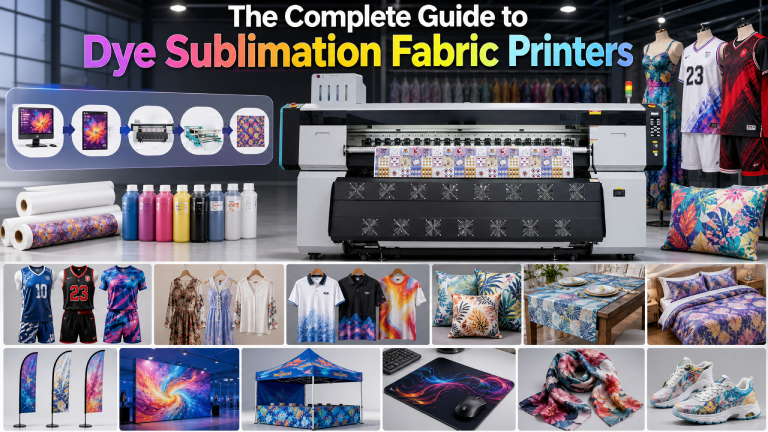
What Is a Dye Sublimation Fabric Printer?
A dye sublimation fabric printer is used to create custom, full-color designs directly on rolls of polyester fabric. Instead of printing one shirt or one item at a time, this type of printer is built to work with continuous fabric, which makes it ideal for businesses that need yardage of custom-printed material for things like flags, banners, soft signage, sportswear fabric, home decor textiles, and more.
Just like with shirts, the ink becomes a gas under heat and bonds into the polyester fibers of the fabric, creating prints that will not crack, peel, or fade the way surface-level prints can. The major difference is scale: a fabric printer needs to handle continuous rolls that can run dozens or even hundreds of meters long, which means the printer, the ink delivery system, and the heat-fixing equipment all need to be built for sustained, high-volume operation rather than one-off jobs.
As described in Wikipedia’s entry on dye-sublimation printing, this shift from single-item to roll-based production also changes how a business thinks about workflow. Rather than queuing individual print jobs one after another, fabric printing operations typically batch multiple designs onto a single roll wherever possible, nesting smaller graphics together to minimize wasted fabric, then cutting the finished roll into individual pieces after printing and heat-fixing are complete. This nesting approach is one of the more practical ways fabric sublimation businesses control material costs at scale.
Two Common Sublimation Fabric Printing Methods
- Transfer printing: the design is printed onto transfer paper first, then heat-pressed onto a fabric roll using a calendar heat press
- Direct-to-fabric printing: ink is printed straight onto polyester fabric that has been pre-treated, then passed through a calendar to fix the dye
As Ordant explains in its breakdown of the sublimation printing process, transfer printing through a calendar heat press is the more common method for large-scale fabric production, since it allows for continuous rolls to be processed efficiently and tends to produce crisper detail and smoother color gradients. Direct-to-fabric printing skips the transfer paper step entirely, which can streamline longer production runs and is often chosen for materials like flag and banner fabric that benefit from deeper dye penetration and stronger show-through on both sides of the material.
Each method has tradeoffs. Transfer printing generally produces the sharpest detail and is well suited to photo-quality designs, while direct printing tends to be faster for very long runs and gives stronger color saturation through the back side of lightweight fabrics, which matters for double-sided flags and banners.
What Can You Make with a Dye Sublimation Fabric Printer?
- Flags and banners for events, sports teams, and outdoor advertising
- Backdrop and event signage, including step-and-repeat backdrops
- Custom sportswear and team uniform fabric before garments are cut and sewn
- Home textiles like pillow covers, curtains, and decorative throws
- Tablecloths, table runners, and trade show booth displays
- Soft signage for retail environments and pop-up shops
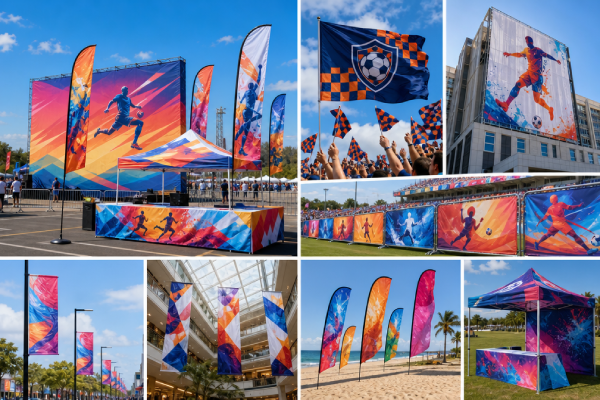
Because the colors stay vibrant and the fabric keeps its natural soft feel, this printing method is popular anywhere bright, detailed graphics need to be printed on soft material rather than rigid surfaces. Weldmaster’s overview of dye sublimation for banners points out that trade show and events businesses in particular favor fabric sublimation because printed soft signage packs flat, ships easily, and can be reused or swapped out for new branding without replacing an entire rigid display structure.
The sportswear and uniform side of the business deserves particular attention, since it often represents repeat, high-volume customers. Teams typically order matching fabric for an entire roster at once, sometimes combined with individual player names and numbers added separately, which means the printer needs to reliably reproduce the exact same colors and pattern across the full order. Many uniform manufacturers print fabric in bulk ahead of the cut-and-sew stage, so consistency across an entire roll directly affects how uniform the finished jerseys look once assembled.
Home decor applications, while smaller in scale individually, have grown steadily as more consumers look for personalized textiles. Custom printed curtains, pillow covers, and throws let smaller businesses compete with mass-market home goods retailers by offering one-of-a-kind designs, often sold through online marketplaces where customers upload their own photos or choose from a designer’s catalog of patterns.
Fabric Choice and Coating Matter Just as Much as the Printer
Just as with shirt printing, the fabric itself plays an enormous role in the final result. Polyester or polyester-blend fabric is required, since the dye needs polymer fibers to bond with. Within the polyester fabric category, there is also a wide range of weights, weaves, and finishes designed for different end uses; a lightweight, sheer polyester works well for indoor backdrops and flags, while a heavier, tightly woven polyester or a coated canvas-style polyester is better suited for outdoor banners that need to handle wind and weather.
Some fabrics are pre-coated specifically to improve dye uptake and color brightness for direct-to-fabric printing. CF Sub Paper’s research on polyester fabric and color longevity notes that fiber structure and weave directly affect how evenly dye distributes during the heat-fixing stage. If you are buying fabric separately from your printer and press, it is worth confirming with your supplier whether the material is rated for sublimation and what heat settings it is designed for, since fabrics built for other dyeing processes will not respond the same way.
Fabric weight is usually measured in grams per square meter, and this number has a real effect on both how the fabric prints and how it behaves in its final use. Lightweight fabrics in the 80 to 120 gsm range are common for flags and indoor backdrops because they drape easily and allow light to pass through for a soft, glowing look on backlit displays. Heavier fabrics in the 200 to 300 gsm range or higher are more common for tablecloths, upholstery-style applications, and items that need more body and opacity.
Color Management for Long Production Runs
One challenge unique to fabric production, compared to printing a single shirt or mug, is keeping color consistent across a long roll. A small color drift that would barely be noticeable on a single item becomes very obvious when comparing the beginning and end of a fifty meter roll, especially for brand-sensitive jobs like uniform fabric where every player’s jersey needs to match.
Good color management starts with a properly profiled printer and a stable ink supply, since temperature and humidity in the production environment can subtly affect how ink lays down over time. Many fabric printing operations build in periodic color checks during a long run, comparing freshly printed sections against a reference swatch, so that any drift is caught early rather than after an entire roll has already been produced. RIP software with built-in color profiles for specific fabric types also helps maintain consistency from one print job to the next, even when switching between different fabric weights or finishes.
Calendar Heat Presses and Production Workflow
For continuous fabric, the heat-fixing step typically uses a calendar heat press rather than a flat clamshell press. A calendar press works like a large heated roller system: the transfer paper and fabric are fed through together under a heated drum, allowing continuous, uninterrupted processing of long rolls rather than pressing one section at a time.
This matters for production speed. A flat press would require stopping, repositioning, and re-pressing repeatedly along a long roll, which is slow and increases the risk of misalignment between sections. A calendar press, by contrast, can run fabric through continuously at a controlled speed, with temperature and pressure set once for the entire run. This is part of why most serious fabric sublimation operations pair their printer with a calendar press sized to match the printer’s maximum width, rather than relying on a flat press meant for smaller rigid items.
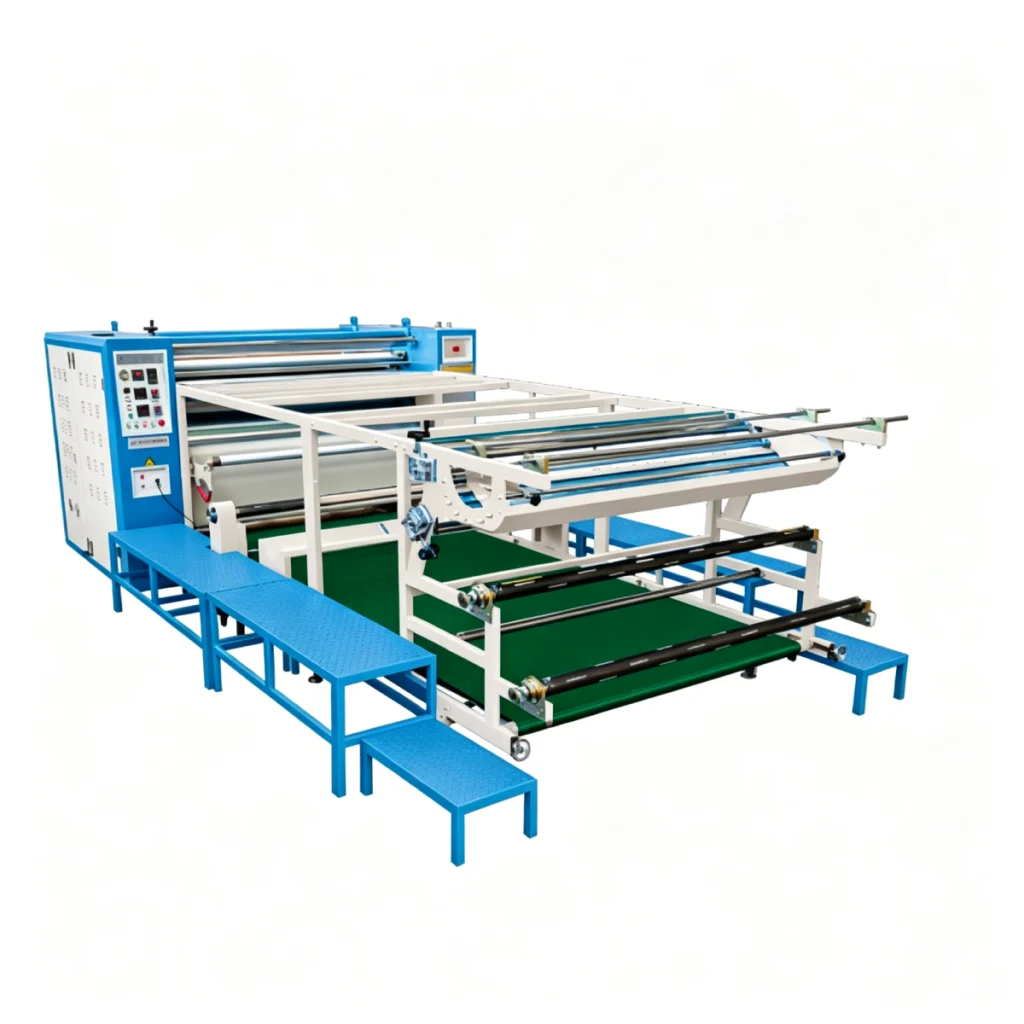
Xinflying Sublimation Heat Press Machine-G1000
Xinflying Sublimation Heat Press Machine G1000 delivers even heat distribution and precise temperature control for high-quality sublimation transfers. Ideal for T-shirts, textiles, mugs, and other personalized products, it ensures vibrant, durable, and consistent printing results.
Cost and Material Efficiency at Scale
Material efficiency becomes a meaningful cost factor once fabric printing moves beyond small test batches. Because fabric and transfer paper are sold by the roll or by length, even small percentages of waste add up quickly across large production runs. Nesting multiple smaller designs together on a single roll width, rather than printing each design on its own separate run, is one of the simplest ways shops reduce wasted material and printer time.
Ink usage also scales differently for fabric compared to smaller items. A single banner or flag might use a relatively small, predictable amount of ink, but full-coverage designs across wide rolls intended for tablecloths or upholstery can consume significantly more ink per square meter. Factoring expected ink consumption into pricing, rather than estimating loosely based on smaller sample prints, helps avoid underpricing larger fabric orders.
What to Look for When Choosing a Fabric Sublimation Printer
Print width matters a lot here, since fabric rolls are often much wider than a single t-shirt. Most commercial dye sublimation fabric printers are available in different width options, commonly ranging from around 1.6 meters up to 3.2 meters or more, so think carefully about the widest fabric roll you plan to print on and whether you might need to scale up later.
You will also want to check ink capacity, since fabric printing often involves longer continuous runs compared to single-item printing, and frequent cartridge changes can slow down production significantly. Color consistency across a long roll is another important factor, especially for businesses that need matching colors across large production batches, such as a sports team ordering matching uniform fabric for dozens of players.
Print speed is also worth comparing closely if you expect high order volume, since fabric printers are often rated in square meters per hour rather than just pages per minute. Finally, consider whether the printer pairs well with a calendar heat press of matching width, since a mismatch between printer and press width will limit how efficiently you can run full-width rolls.
Xinflying dye sublimation printers designed for fabric and textile production, with options suited for different roll widths and production volumes.
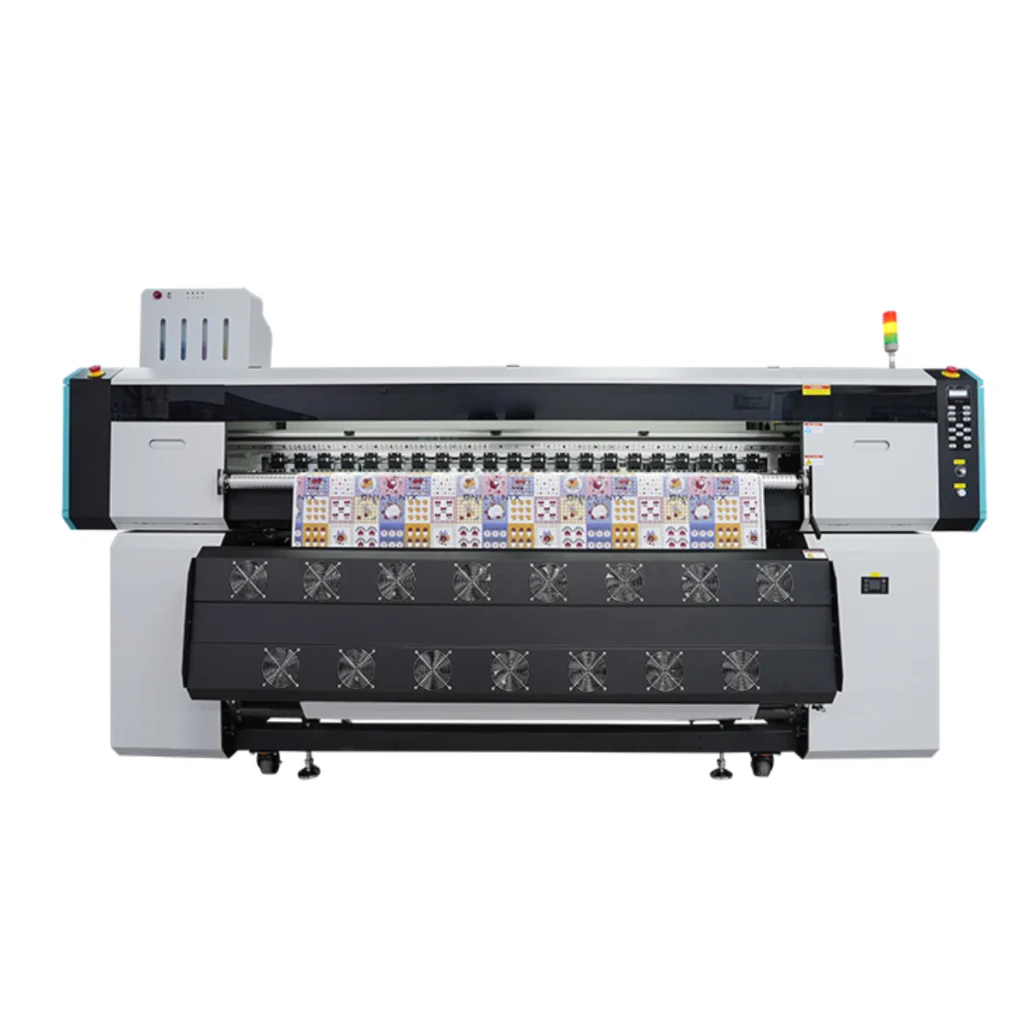
Xinflying Dye Sublimation Printer-O2000
Xinflying Dye Sublimation Fabric Printer O2000 is a high-speed industrial dye sublimation printer designed for large-format textile printing. It delivers vibrant colors, sharp image quality, and stable performance for sportswear, fashion, home textiles, flags, and soft signage production.
Maintaining Equipment for Reliable Long-Term Output
Fabric sublimation printers tend to run for long, continuous stretches, which means regular maintenance plays a bigger role than it might for a printer used only occasionally. Print heads in particular benefit from routine cleaning cycles to prevent nozzle clogging, since dried ink in even a single nozzle can show up as a faint streak running the entire length of a finished roll. Most commercial machines include automated cleaning routines, but keeping the print environment free of dust and maintaining stable humidity also goes a long way toward preventing problems before they start.
It is also worth tracking ink usage and replacing filters or dampers on a regular schedule rather than waiting for a visible problem to appear, since catching wear before it affects output quality avoids the cost of reprinting an entire roll partway through a job. For businesses running fabric printers daily, building a simple maintenance log, noting cleaning cycles, ink changes, and any irregularities, makes it much easier to spot patterns and schedule servicing proactively.
Frequently Asked Questions
Polyester or high polyester-blend fabric works best, since sublimation ink needs polyester fibers to bond with permanently.
It depends on your setup. Transfer printing uses paper and a calendar heat press, while some systems print directly onto specially coated fabric. Transfer printing is more common for continuous roll production.
Dye sublimation fabric printers are built specifically for continuous roll printing, making them well suited to larger production runs as well as smaller custom orders.
Yes, sublimated prints resist fading and cracking, which makes them a popular choice for flags and outdoor signage as long as the base fabric is suited for outdoor use.
Transfer printing prints the design on paper first and then presses it onto fabric, while direct-to-fabric printing applies ink straight onto pre-treated polyester before fixing it with heat. Transfer printing tends to give sharper detail, while direct printing can be faster for long runs.
You Might Also Like: