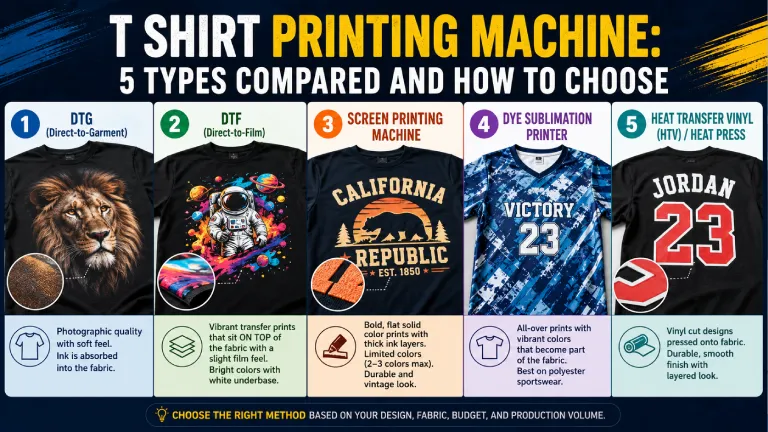
“T shirt printing machine” isn’t one piece of equipment — it’s an umbrella term covering at least five genuinely different technologies, each with its own cost structure, fabric limits, and ideal order size. Here’s an honest breakdown of each one, so you can figure out which type actually fits your business instead of guessing.
The 5 Main Types of T Shirt Printing Machines
Most custom apparel businesses end up choosing between five core technologies: DTG, DTF, screen printing, dye sublimation, and heat transfer vinyl (HTV). Each works in a fundamentally different way, which is why the “best” t shirt printing machine really depends on your order volume, design style, and target fabric — not just budget.
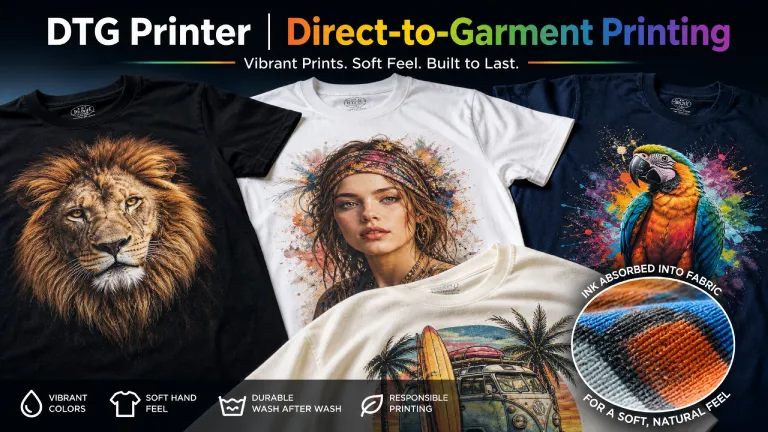
1. DTG (Direct-to-Garment) Printer
A DTG printer sprays ink directly onto the fabric using inkjet technology, the same digital-first approach as a paper printer, just built for textiles. Dark garments need a pretreatment step and a white ink underbase; light garments generally don’t.
- Best for: detailed, full-color, photo-quality designs and small-batch or one-off orders.
- Fabric: works best on 100% cotton or high-cotton blends; performance drops on synthetic-heavy fabric.
- Setup cost per design: none — no screens or films needed, print straight from a digital file.
- Limitation: pretreatment and curing steps require more process control than some other methods to get consistent results.
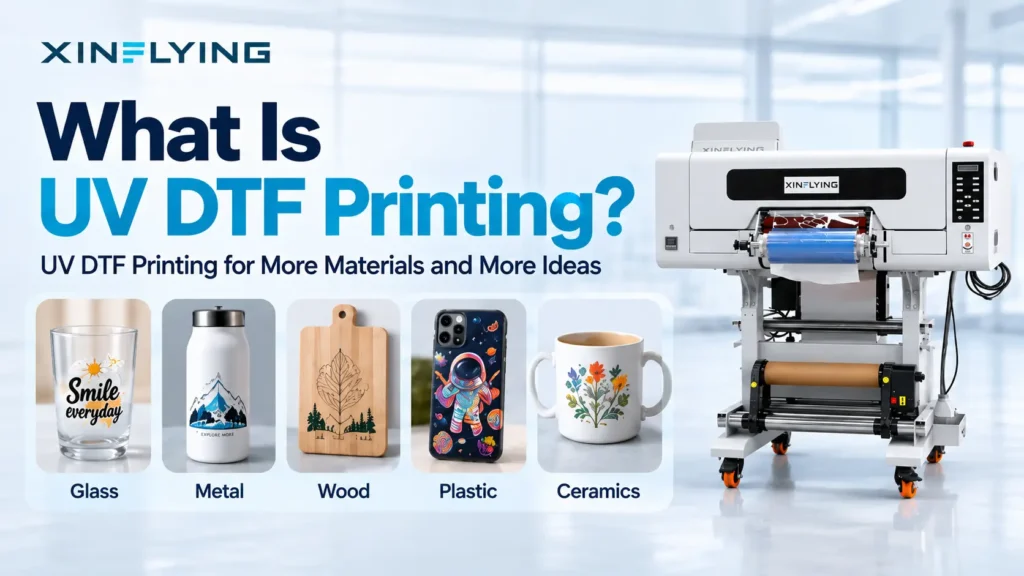
2. DTF (Direct-to-Film) Printer
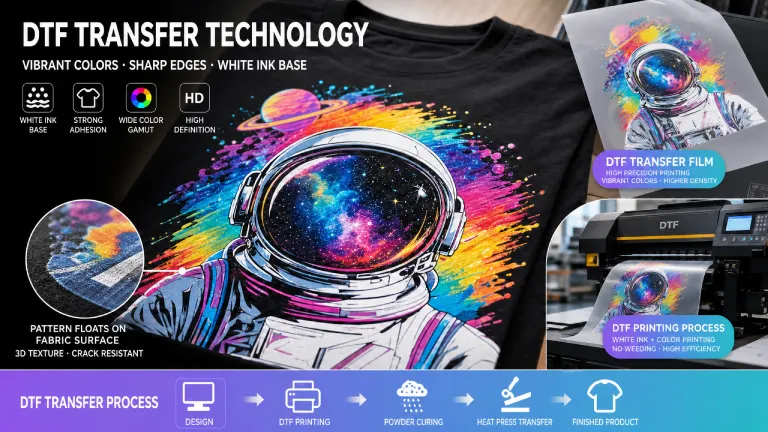
A DTF printer prints the design onto PET film with a white ink underbase, applies adhesive powder, cures it, and then heat-presses the finished transfer onto the garment.
- Best for: mixed fabric types, dark garments, gang sheet production, and shops wanting one machine that handles cotton, polyester, and blends.
- Fabric: works across cotton, polyester, blends, and some non-apparel materials — no pretreatment required.
- Setup cost per design: none — same digital, file-to-print workflow as DTG.
- Limitation: involves more steps than DTG (printing, powdering, curing, pressing), so the workflow has more points where something can go wrong without routine maintenance.
3. Screen Printing Machine
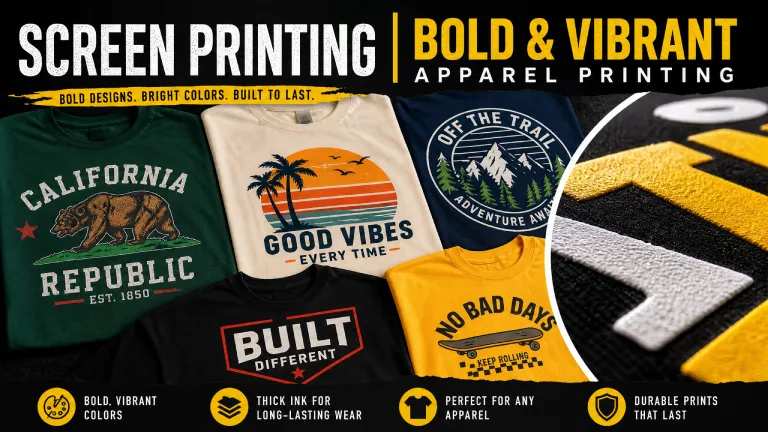
Screen printing pushes ink through a stencil (screen) onto the fabric, with a separate screen required for each color in the design.
- Best for: large runs of a single design with a limited color count — the more shirts you print of one design, the cheaper screen printing becomes per unit.
- Fabric: works on virtually any fabric type, since plastisol ink sits on the surface rather than depending on fiber absorption.
- Setup cost per design: high relative to digital methods — each color needs its own screen, which takes time and money to prepare.
- Limitation: not economical for small orders, one-offs, or designs with many colors or photo-quality gradients.
4. Dye Sublimation Printer
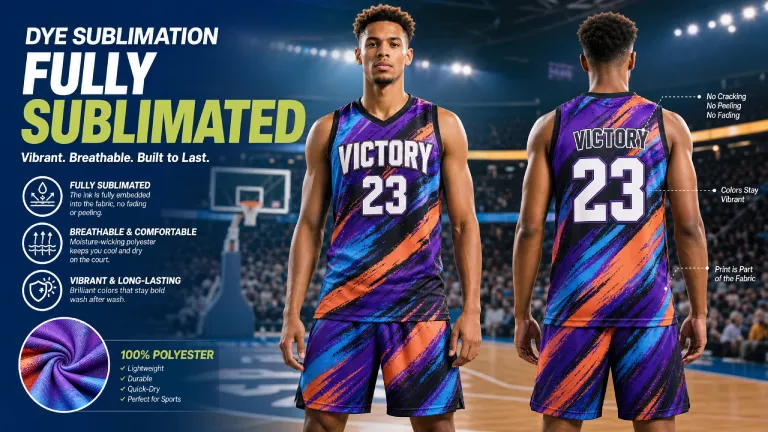
Sublimation prints a design onto transfer paper using sublimation ink, then uses heat to turn the ink into a gas that bonds permanently with polyester fibers.
- Best for: all-over, edge-to-edge designs on polyester sportswear, activewear, and similar synthetic apparel.
- Fabric: requires high-polyester content fabric — it doesn’t work on cotton or dark-colored garments at all.
- Setup cost per design: none — digital file to print, similar to DTG and DTF.
- Limitation: fabric restriction is absolute; light-colored, high-polyester fabric is a hard requirement, not a preference.
5. Heat Transfer Vinyl (HTV) / Heat Press
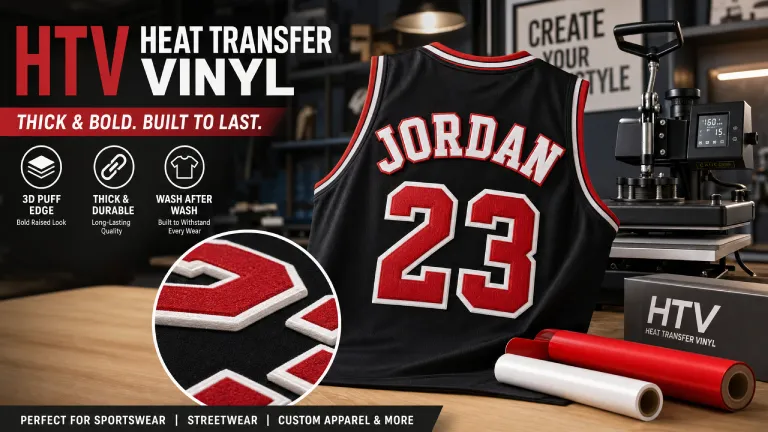
HTV involves cutting a design out of colored vinyl sheet using a vinyl cutter, then bonding it to the garment with a heat press.
- Best for: simple designs, bold text, team/sports names and numbers, and very low-volume or single-item orders.
- Fabric: works on most fabric types, since it’s a physical, surface-applied material rather than an ink-based process.
- Setup cost per design: low — no screens, but each color layer needs to be cut and weeded separately.
- Limitation: not practical for photo-quality or highly detailed multi-color designs; better suited to simpler graphics.
Quick Comparison: Which Machine Fits Your Business?
- Small business just starting out, mixed order types: DTF — flexible fabric compatibility and no per-design setup cost.
- Boutique shop focused on detailed, photo-quality art on cotton: DTG.
- Wholesale or bulk orders of the same design: screen printing.
- Sportswear, activewear, all-over polyester designs: dye sublimation.
- Team names/numbers, simple text, very low volume: HTV with a heat press.
Frequently Asked Questions
There’s no universal answer, but DTF is often the easiest entry point for new businesses since it works on a wide range of fabrics, doesn’t require pretreatment, and handles single-item orders without the per-color setup cost of screen printing.
Yes, and many growing shops do — using DTF or DTG for small, detailed, or one-off orders while adding screen printing once order volume justifies the setup cost for bulk single-design runs.
Screen printing and DTF are generally considered the most wash-durable options when done correctly, since both create a strong bonded layer on the fabric surface. DTG durability depends heavily on proper curing and fabric type.
No. Heat press and HTV setups tend to have the shortest learning curve, while DTG and screen printing require more attention to variables like pretreatment, ink curing, and screen registration to get consistent results.
Cost varies enormously by technology and scale — from a few hundred dollars for a basic heat press to tens of thousands for an industrial multi-head DTF or DTG system. Budget should be driven by your expected order volume and design complexity, not just the lowest entry price.
DTG, DTF, and screen printing all handle dark fabric well, since each uses (or can use) a white ink or white plastisol underbase. Sublimation is the exception — it requires light-colored polyester and doesn’t work on dark garments at all.
Related Resources
• What Is a Digital Garment Printer? A Complete Guide
• DTF Printer for Gang Sheets: How to Choose the Right Machine
External reference — Direct-to-garment printing (Wikipedia)