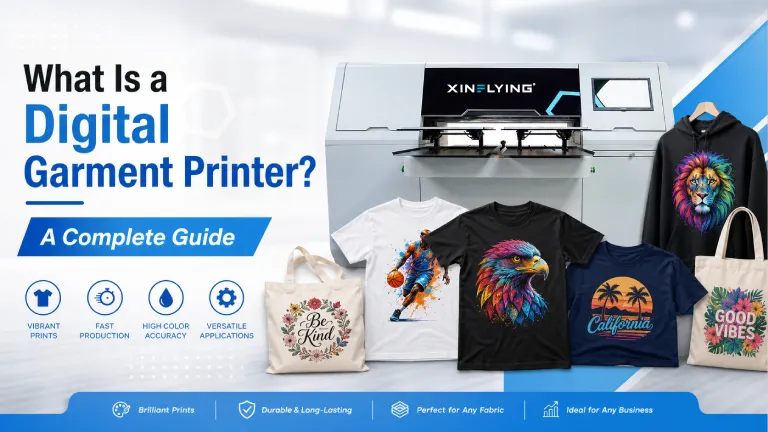
Uma impressora digital para roupas é uma das formas mais acessíveis de entrar no mercado de produção de roupas personalizadas — sem telas, sem chapas e sem configuração por cor. Veja aqui exatamente o que esse termo significa, como a tecnologia funciona e o que você deve levar em consideração caso esteja pensando em incorporar essa tecnologia ao seu negócio.
O que é uma impressora digital para roupas?
Uma impressora digital para roupas é uma impressora jato de tinta especializada que pulveriza tinta diretamente sobre o tecido para produzir desenhos coloridos com qualidade fotográfica em camisetas, moletons com capuz e outras peças de vestuário. “Impressora digital para roupas” é, essencialmente, outro nome para uma Impressora DTG (Direct-to-Garment) — esses termos são usados de forma intercambiável no setor, juntamente com “impressora digital de roupas” e “impressora digital de camisetas”. Ao contrário da serigrafia, que exige uma tela física para cada cor de um desenho, uma impressora digital de roupas trabalha diretamente a partir de um arquivo digital, da mesma forma que uma impressora a jato de tinta para papel, só que projetada para tecido em vez de papel.
Essa abordagem que prioriza o digital é o que torna a tecnologia tão flexível: gradientes, fotografias e ilustrações complexas com várias cores são impressas em uma única passagem, sem custo adicional de configuração — o que representa um modelo econômico fundamentalmente diferente da configuração da serigrafia, que é feita por cor e por tela.
Como funciona uma impressora digital para tecidos
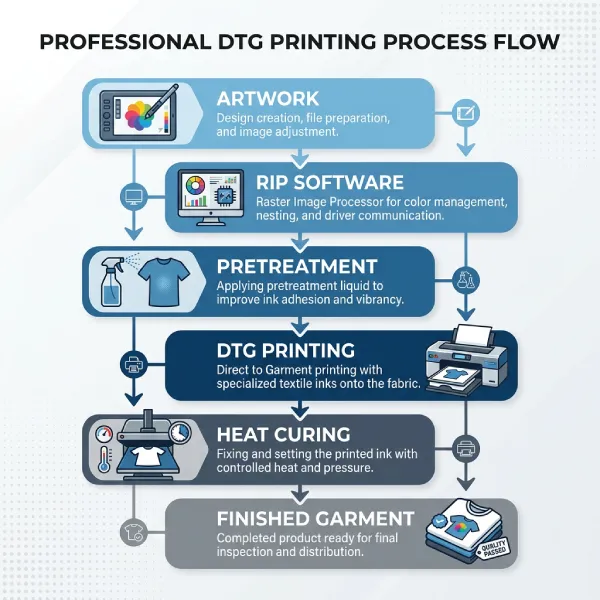
- 1. Preparação do design: a arte é criada ou enviada e processada por meio de um software RIP, que prepara o perfil de cor do arquivo e, no caso de peças escuras, separa uma camada de tinta branca.
- 2. Pré-tratamento (apenas para peças escuras/coloridas): uma solução de pré-tratamento é aplicada ao tecido e seca, criando uma superfície que permite que a tinta branca adira adequadamente e seja impressa com opacidade total.
- 3. Colocação: a peça de roupa é esticada e fixada na base da impressora, removendo rugas que poderiam distorcer a impressão ou fazer com que o cabeçote de impressão encostasse no tecido.
- 4. Impressão: o cabeçote de impressão pulveriza primeiro tinta branca (para peças escuras), seguida pelas tintas coloridas CMYK, diretamente sobre as fibras do tecido.
- 5. Cura: o calor — proveniente de uma prensa térmica ou de um secador de esteira — fixa a tinta permanentemente no tecido, tornando a estampa resistente à lavagem.
O que diferencia as impressoras digitais para roupas de outros equipamentos
- Tinta têxtil especializada: as impressoras digitais para roupas utilizam tintas à base de água formuladas para se ligarem às fibras do tecido, e não tintas de jato de tinta para papel.
- Uma placa de fixação para tecidos: em vez de uma bandeja de papel, a impressora possui uma placa plana e ajustável que mantém o tecido esticado e estável durante a impressão.
- Tinta branca recurso: a maioria das impressoras digitais para tecidos possui um canal dedicado à tinta branca, essencial para imprimir em qualquer tecido que não seja branco ou muito claro.
- Integrado ou emparelhado pré-tratamento: muitas máquinas integram o pré-tratamento ao fluxo de trabalho, enquanto outras exigem uma estação de pré-tratamento separada ou aplicação manual.
Impressora digital para roupas x Serigrafia vs. DTF
- Impressora digital para roupas (DTG): ideal para pequenos lotes, pedidos únicos e designs detalhados em cores, principalmente em tecidos de algodão e misturas de algodão — sem custo de configuração por cor.
- Serigrafia: a opção mais econômica para grandes tiragens de um único desenho com um número limitado de cores, mas cara e demorada de configurar para pedidos pequenos ou com muitos detalhes.
- DTF (Direct-to-Film): imprime primeiro em filme e, em seguida, aplica-se a impressão por pressão térmica no tecido — funciona com uma variedade maior de tipos de tecido do que a impressão DTG, incluindo poliéster e tecidos mistos, sem a necessidade de pré-tratamento.
O que levar em consideração ao escolher uma impressora digital para tecidos
- Tamanho da área de impressão: adapte o tamanho da placa de impressão aos desenhos que você costuma imprimir — desenhos que ocupam toda a parte de trás exigem uma área de impressão maior do que logotipos no lado esquerdo do peito.
- Sistema de circulação de tinta branca: como a tinta branca se deposita mais rapidamente do que as tintas CMYK, um sistema ativo de circulação ou agitação reduz o entupimento e a necessidade de manutenção diária.
- Pré-tratamento integrado x pré-tratamento separado: uma máquina multifuncional com pré-tratamento integrado simplifica o fluxo de trabalho e economiza espaço, enquanto uma estação de pré-tratamento separada oferece maior controle para operações de maior volume.
- Tipo e número de cabeçotes de impressão: geralmente, um número maior de cabeçotes significa maior velocidade de produção, o que se torna importante quando o volume diário de pedidos ultrapassa o uso ocasional ou amador.
- Compatibilidade com o software RIP: verifique se a impressora é compatível com o software RIP com o qual você está acostumado, já que ele controla a precisão das cores e a aplicação da tinta branca.
Perguntas frequentes
Sim. Os termos “impressora digital para roupas”, “impressora digital de vestuário” e “impressora DTG” (Direct-to-Garment) referem-se todos à mesma tecnologia subjacente — uma impressora que pulveriza tinta diretamente sobre o tecido utilizando tecnologia a jato de tinta, de forma digital, sem telas nem chapas.
O algodão 100% produz os melhores resultados, já que suas fibras absorvem a tinta DTG à base de água de maneira uniforme. Misturas de algodão também podem ser impressas, embora a vivacidade e a durabilidade da impressão geralmente diminuam à medida que o teor de poliéster aumenta; além disso, tecidos sintéticos puros não são adequados para a tinta DTG padrão.
Apenas para peças escuras ou coloridas, nas quais uma camada de base de tinta branca requer pré-tratamento para aderir adequadamente e garantir uma impressão com cores vibrantes. Peças claras ou brancas geralmente não precisam de pré-tratamento, já que o desenho é impresso diretamente no tecido, sem a necessidade de uma base branca opaca por baixo.
Uma impressora digital para tecidos utiliza tintas têxteis especializadas, uma placa de pressão projetada para manter o tecido plano e estável e, frequentemente, um canal para tinta branca — itens que uma impressora jato de tinta comum para papel não possui. A tecnologia do cabeçote de impressão pode ser semelhante, mas a formulação da tinta e o projeto mecânico são desenvolvidos especificamente para tecidos.
Normalmente não — os dois métodos atendem a perfis de pedidos diferentes. As impressoras digitais para roupas são mais econômicas para pequenos lotes, pedidos únicos e designs altamente detalhados, enquanto a serigrafia continua sendo mais econômica para grandes tiragens de um único design com poucas cores.
Além da própria impressora, uma instalação completa requer espaço para uma estação (ou máquina) de pré-tratamento, um método de cura (prensa térmica ou secador com esteira transportadora) e uma área de trabalho para carregar e descarregar peças de vestuário — ao planejar o espaço, leve em consideração mais do que apenas a área ocupada pela impressora.