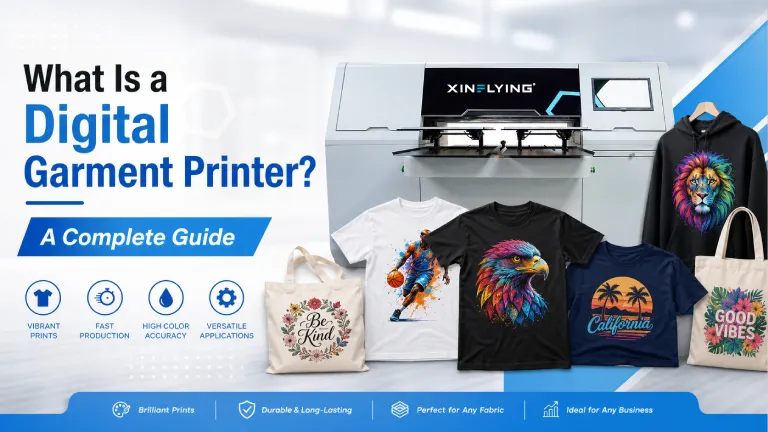
A digital garment printer is one of the most approachable ways to get into custom apparel production — no screens, no plates, no per-color setup. Here’s exactly what the term means, how the technology works, and what to look for if you’re considering adding one to your business.
What Is a Digital Garment Printer?
A digital garment printer is a specialized inkjet printer that sprays ink directly onto fabric to produce full-color, photo-quality designs on t-shirts, hoodies, and other apparel. “Digital garment printer” is essentially another name for a DTG (Direct-to-Garment) printer — the terms are used interchangeably in the industry, along with “digital apparel printer” and “digital t-shirt printer.” Unlike screen printing, which requires a physical screen for every color in a design, a digital garment printer works straight from a digital file, the same way a paper inkjet printer would, just built for fabric instead of paper.
This digital-first approach is what makes the technology so flexible: gradients, photographs, and complex multi-color artwork print in a single pass with no extra setup cost, which is a fundamentally different economic model than screen printing’s per-color, per-screen setup.
How a Digital Garment Printer Works
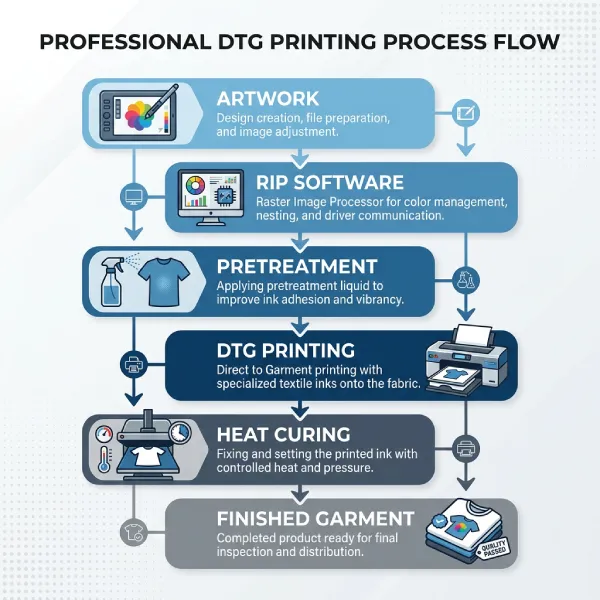
- 1. Design preparation: artwork is created or uploaded and processed through RIP software, which prepares the file’s color profile and, for dark garments, separates out a white ink layer.
- 2. Pretreatment (dark/colored garments only): a pretreatment solution is applied to the fabric and dried, creating a surface that allows white ink to bond properly and print with full opacity.
- 3. Loading: the garment is stretched flat and secured on the printer’s platen, removing wrinkles that could distort the print or cause the printhead to strike the fabric.
- 4. Printing: the printhead sprays white ink first (for dark garments) followed by CMYK color inks directly onto the fabric fibers.
- 5. Curing: heat — from a heat press or conveyor dryer — bonds the ink permanently into the fabric, making the print wash-durable.
What Makes Digital Garment Printers Different from Other Equipment
- Specialized textile ink: digital garment printers use water-based inks formulated to bond with fabric fibers, not paper-based inkjet ink.
- A garment platen: instead of a paper tray, the printer has a flat, adjustable platen that holds fabric taut and stable during printing.
- الحبر الأبيض capability: most digital garment printers include a dedicated white ink channel, essential for printing on anything other than white or very light fabric.
- Built-in or paired pretreatment: many machines integrate pretreatment into the workflow, while others require a separate pretreatment station or manual application.
Digital Garment Printer vs. Screen Printing vs. DTF
- Digital garment printer (DTG): best for small batches, one-off orders, and detailed full-color designs on primarily cotton and cotton-blend fabric — no per-color setup cost.
- Screen printing: most cost-effective for large runs of a single design with a limited number of colors, but expensive and slow to set up for small or highly detailed orders.
- DTF (Direct-to-Film): prints onto film first, then heat-presses onto fabric — works across a wider range of fabric types than DTG, including polyester and blends, without requiring pretreatment.
What to Look for in a Digital Garment Printer
- Print area size: match the platen size to the designs you’ll typically print — full-back designs need a larger print area than left-chest logos.
- White ink circulation system: since white ink settles faster than CMYK, an active circulation or agitation system reduces clogging and daily maintenance.
- Integrated vs. separate pretreatment: an all-in-one machine with built-in pretreatment simplifies the workflow and saves floor space, while a separate pretreatment station offers more control for higher-volume operations.
- Printhead type and count: more printheads generally mean faster throughput, which matters once daily order volume grows beyond occasional or hobbyist use.
- RIP software compatibility: confirm the printer works with RIP software you’re comfortable with, since this controls color accuracy and white ink placement.
الأسئلة الشائعة
Yes. “Digital garment printer,” “digital apparel printer,” and “DTG printer” (Direct-to-Garment) all refer to the same underlying technology — a printer that sprays ink directly onto fabric using inkjet technology, digitally, without screens or plates.
يُحقق القطن من نوع 100% أفضل النتائج، حيث تمتص أليافه حبر DTG المائي بشكل جيد. ويمكن أيضًا الطباعة على الخلطات القطنية، على الرغم من أن حيوية الألوان ومتانة الطباعة تنخفضان عمومًا مع زيادة نسبة البوليستر، كما أن الأقمشة الاصطناعية الخالصة لا تتناسب جيدًا مع حبر DTG القياسي.
يقتصر ذلك على الملابس الداكنة أو الملونة، حيث تحتاج الطبقة التمهيدية من الحبر الأبيض إلى معالجة مسبقة لتثبيتها بشكل صحيح ولطباعتها بألوان زاهية. أما الملابس الفاتحة أو البيضاء، فلا تحتاج عمومًا إلى معالجة مسبقة، حيث يُطبع التصميم مباشرةً على القماش دون الحاجة إلى طبقة أساسية بيضاء غير شفافة تحتها.
تستخدم الطابعة الرقمية للملابس أحبارًا متخصصة للأقمشة، ولوحة ضغط مصممة لتثبيت القماش بشكل مسطح وثابت، وغالبًا ما تحتوي على قناة للحبر الأبيض — وهي عناصر لا تتوفر في أي طابعة نافثة للحبر عادية مخصصة للورق. وقد تكون تقنية رأس الطباعة مشابهة، لكن تركيبة الحبر والتصميم الميكانيكي مصممان خصيصًا للأقمشة.
Not usually — the two methods serve different order profiles. Digital garment printers are more cost-effective for small batches, one-off orders, and highly detailed designs, while screen printing remains more economical for large runs of a single design with few colors.
Beyond the printer itself, a full setup needs room for a pretreatment station (or machine), a curing method (heat press or conveyor dryer), and workspace for loading and unloading garments — plan for more than just the printer’s own footprint when budgeting space.