How Mug Sublimation Printing Works
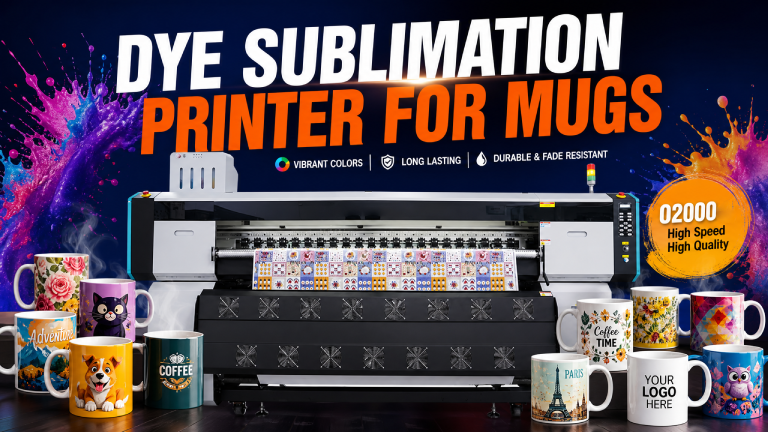
Custom photo mugs are one of the most popular sublimation products, and the process is similar to shirt printing but uses a different kind of heat press built for curved surfaces. A dye sublimation printer for mugs prints your design onto sublimation transfer paper, which is then wrapped tightly around a specially coated ceramic mug. The mug goes into a mug heat press, which applies heat and even pressure around the curved surface so the design transfers cleanly without warping, stretching, or leaving gaps.
Once heated, typically to around 380 to 400 degrees Fahrenheit for four to five minutes depending on the press and coating, the ink turns to gas and bonds into the polymer coating on the mug. After it cools, the design becomes part of the surface, which is why sublimated mugs can handle dishwashers and microwaves far better than mugs decorated with stickers, decals, or printed wraps that sit on top of the glaze.
Mug presses typically use a wrap-style clamshell design with a heating element that curls around the mug body, applying pressure evenly from all sides. Some setups use a silicone wrap and a heat gun or convection oven instead of a clamshell press, which can work for small batches but tends to be slower and less consistent for regular production.
It is worth pointing out that the heat source itself matters too. As Wikipedia notes in its overview of dye-sublimation printing, clamshell mug presses heat the entire wrap element to a set temperature and hold it there for the full cycle, giving very predictable, repeatable results once dialed in. Convection oven methods, by contrast, rely on hot air circulating around the mug, which can lead to slightly less even heating around the handle area where airflow is partially blocked, sometimes resulting in a faint band of lighter color near the handle that clamshell presses tend to avoid.
What You Need to Get Started
- A dye sublimation printer loaded with sublimation ink
- Sublimation transfer paper rated for the printer and ink combination you are using
- Sublimation-coated ceramic mugs, since regular uncoated mugs will not work
- A mug heat press, often shaped to fit the curve of the mug, available in single, dual, and multi-mug versions
- Heat-resistant tape to hold the transfer paper in place during pressing
- Heat-resistant gloves, since mugs and press components reach high temperatures during the cycle
It is worth noting that not all mugs work for this process. As ITNH explains in its guide on dye sublimation printers, you need mugs that have a special polyester-based coating made for sublimation, usually applied during manufacturing as a thin polymer layer over the ceramic base. Regular ceramic mugs without this coating will not hold the print at all, even if you follow every other step correctly, because there is nothing for the gaseous dye to bond with.
Beyond Standard Mugs: Other Drinkware Options
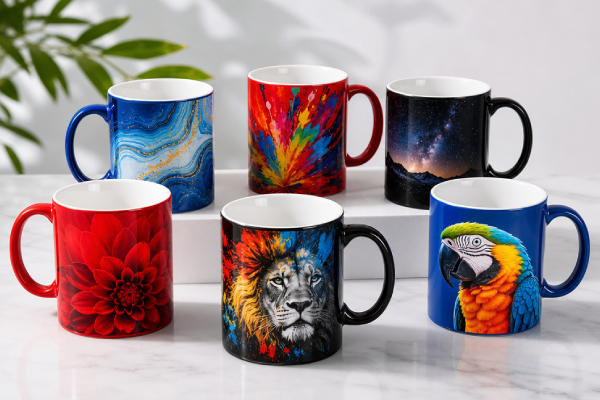
Two-tone mugs with a colored exterior and white interior for higher contrast designs
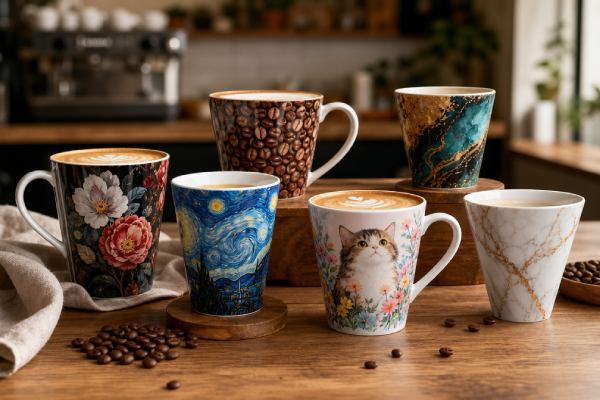
Latte and conical mugs with a different shape than the standard cylindrical mug
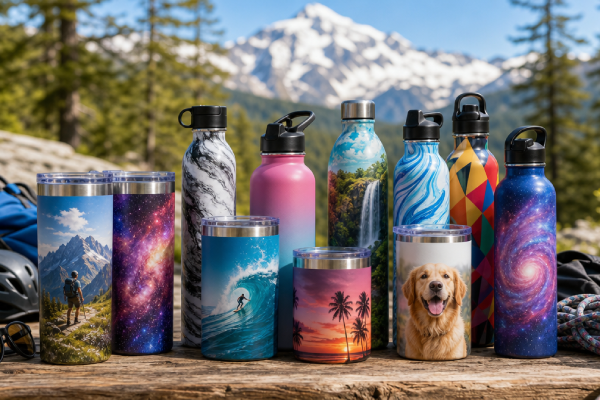
Sublimation tumblers and water bottles, which use similar wrap-style presses
Each of these variations may need a slightly different press attachment or heat cycle, so it is worth checking compatibility before adding a new product shape to your lineup. Color-changing mugs in particular use a heat-reactive coating layered beneath the sublimation coating, so the press settings often differ slightly from a standard white mug, and getting them wrong can either prevent the color-change effect from working or damage the underlying design.
Designing Artwork That Works Well on a Curved Mug Surface
Designing for a mug is not quite the same as designing for a flat shirt or panel, because the printed image has to wrap around a cylindrical surface without distortion in the final product. Most mug press templates account for this by providing a flat design template sized to the exact wrap dimensions of the mug, usually accounting for a small overlap seam on the back side or handle area where the print does not need to be visible.
Designers who are new to mug printing sometimes place important text or focal points too close to the edges of the template, not realizing that this area will end up near the handle or the seam where the wrap overlaps slightly. A good rule of thumb is to keep critical design elements, like faces in a photo or readable text, within the central two-thirds of the template, leaving margin near the top, bottom, and side edges for safe wrapping.
Resolution also matters more for mugs than people expect, since customers often hold and examine mugs up close. Designs built from low-resolution source photos can look noticeably soft or pixelated once printed at full mug size, so working from high-resolution source images, generally 300 dots per inch or higher at final print size, produces noticeably crisper results.
Why Businesses Choose Sublimation for Mugs
Mug printing is a popular product for personalized gift shops, photo printing businesses, wedding and event favor makers, and small online stores selling custom merchandise. As Thrive Screen Printing notes in its explainer on dye sublimation, sublimated mugs allow for full-color photos and detailed designs, and since the print becomes part of the coating, it holds up much better over time compared to vinyl decals or printed wraps, especially with repeated washing and microwave use.
The product category is also attractive from a business standpoint because mug blanks are relatively inexpensive, production turnaround per item is fast, and customers strongly associate photo mugs with personalized gifts for holidays, birthdays, weddings, and corporate giveaways. This combination of low cost, fast turnaround, and strong demand around gifting seasons makes mugs a common starting product for new sublimation businesses before they expand into shirts, tumblers, or other items.
Demand for personalized mugs tends to spike heavily around predictable calendar moments, including major winter holidays, Mother’s Day, Father’s Day, graduation season, and Valentine’s Day, with corporate orders for branded mugs spread more evenly throughout the year, as Smartech Online notes in its overview of dye sublimation applications. Many small sublimation businesses plan inventory of blank mugs and production capacity around these seasonal peaks, since running short on blanks or press capacity during a major gifting season can mean turning away a large share of annual revenue.
Choosing the Right Setup for Mug Printing
If mugs will be a major part of your product line, look for a dye sublimation printer with reliable, consistent color output, since photo-based designs need accurate skin tones and smooth color blending, both of which are unforgiving of print head inconsistency. Pair it with a mug press that fits the range of mug sizes you plan to sell, since standard 11oz mugs, larger 15oz mugs, and specialty shapes like conical or latte mugs may need different press attachments or wraps.
If you expect higher order volume, consider a multi-mug press that can process several mugs in one heating cycle, which significantly improves throughput compared to single-mug presses during busy seasons like the holidays. Also factor in workspace ventilation, since the heat press process can release a noticeable odor, and a well-ventilated space makes for a more comfortable production environment.
Xinflying offers dye sublimation printers suitable for mug production along with compatible heat press equipment for shops getting started with personalized drinkware.
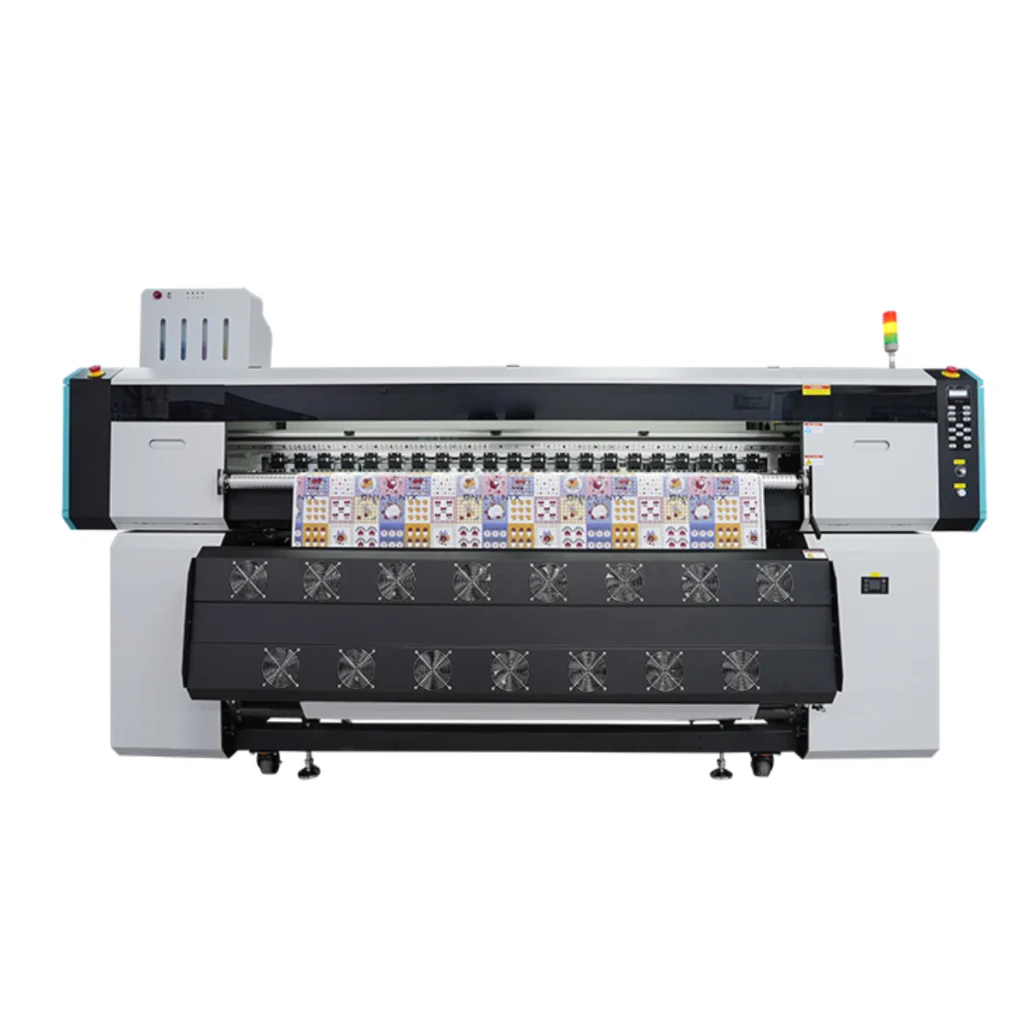
Xinflying Dye Sublimation Printer-O2000
Xinflying Dye Sublimation Printer O2000 is a high-speed industrial dye sublimation printer designed for large-format textile printing. It delivers vibrant colors, sharp image quality, and stable performance for sportswear,mugs, home textiles, flags, and soft signage production.
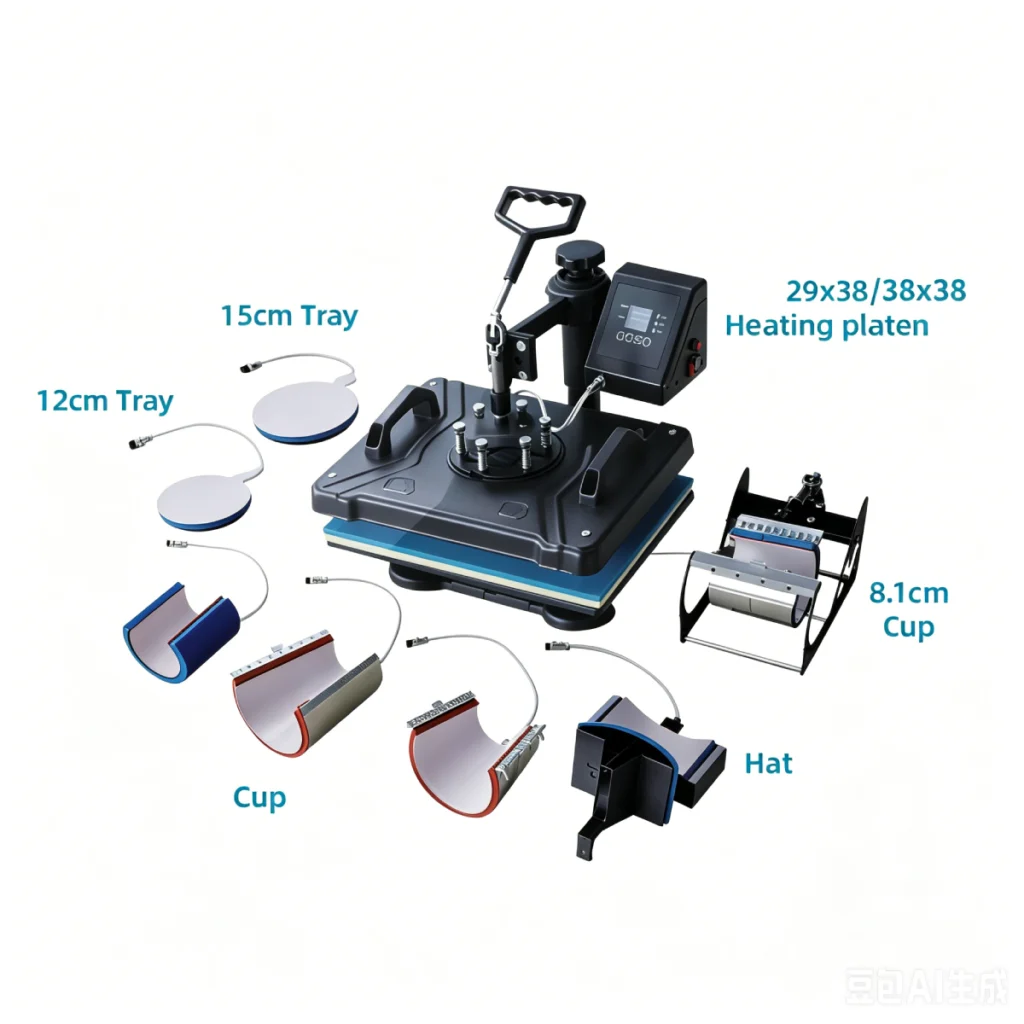
Xinflying Sublimation Heat Press Machine-27A
The 8 in 1 Multi-functional Manual Combo Heat Press Machine is designed for versatile heat transfer applications, including T-shirts, mugs, caps, plates, and more.
Troubleshooting Common Mug Printing Problems
- Faded or dull colors: usually caused by temperature set too low or pressing time cut short
- White gaps or unprinted lines: typically from an uneven wrap or the transfer paper shifting during pressing
- Yellowing background on white mugs: often a sign of overheating or pressing too long
- Blurry or doubled edges: commonly caused by the transfer paper sliding slightly mid-press, usually fixed with better tape placement
Most mug printing problems trace back to one of a small handful of root causes, and keeping a simple settings log, noting temperature, time, and which mug brand or coating was used, makes it much faster to diagnose issues when something does not turn out right. Since different mug suppliers sometimes use slightly different coatings, it is common for shops to need to fine-tune settings again whenever they switch to a new mug supplier, even if the new mugs look identical to the old ones.
Sourcing Mug Blanks and Building a Reliable Supply Chain
For any business planning to produce mugs regularly, the relationship with a blank mug supplier matters almost as much as the printer and press themselves. Coating quality varies between suppliers, and a coating that is too thin or unevenly applied can cause inconsistent results even when your press settings are correct. Many shops order sample batches from a few different suppliers before settling on one as their primary source, testing the same design across each supplier’s blanks side by side to compare color vibrancy and coating consistency.
Lead times for mug blanks also deserve attention, particularly heading into peak gifting seasons. Running out of a popular mug size or color during a busy period can mean lost sales, so many established mug printing businesses keep a buffer of extra inventory on hand during the months leading into major holidays, rather than ordering on a strict just-in-time basis.
Frequently Asked Questions
No, you need mugs with a special polyester coating designed for sublimation. Regular uncoated ceramic mugs will not hold the print.
Generally yes, since the print is bonded into the coating rather than sitting on the surface, though following the mug manufacturer’s care instructions will help the print last longer.
Yes, a mug heat press is shaped to apply even pressure around the curved surface of a mug, which a flat heat press cannot do properly.
Most mug sublimation cycles take just a few minutes in the heat press, making it a fast process for both single orders and small batch production.
Yes, the same dye sublimation printer and ink can be used for tumblers and water bottles, though you will typically need a separate wrap-style press designed for those specific shapes.
You Might Also Like: