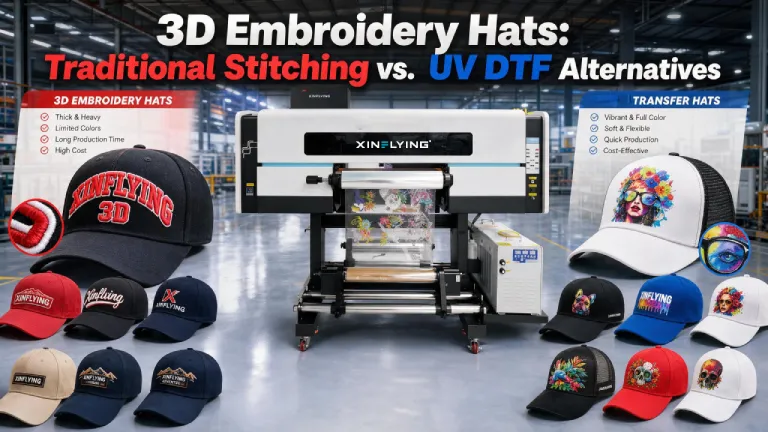
“Lorsque l'on se penche sur les équipements nécessaires à la ” broderie 3D sur casquettes », on découvre généralement deux technologies très différentes : les machines traditionnelles de broderie en relief à aiguilles, ... Imprimantes UV DTF qui reproduisent l'effet d'une broderie en relief à l'aide d'encre plutôt que de fil. Ce guide vous explique les deux techniques en toute transparence, afin que vous puissiez déterminer laquelle convient le mieux à votre activité de vente de casquettes.
Qu'est-ce que la broderie 3D sur les casquettes ?
“La broderie ” 3D “ ou ” en relief » désigne un motif texturé et en relief sur une casquette ou un bonnet, qui confère aux lettres et aux logos un aspect tridimensionnel et saillant, au lieu de rester à plat contre le tissu. Il existe aujourd’hui deux méthodes distinctes utilisées par les entreprises pour obtenir cet effet, et leur fonctionnement est très différent :
- Broderie en relief traditionnelle : une sous-couche en mousse est placée sous la zone à broder, puis une machine à broder à aiguille coud du fil par-dessus la mousse, ce qui la comprime et lui donne la forme d'un motif en relief.
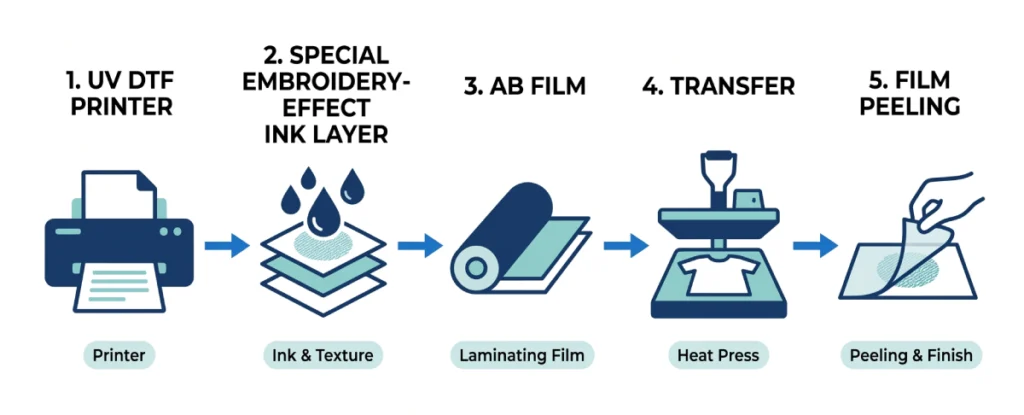
- Impression 3D UV DTF imitant la broderie : une imprimante UV DTF superpose des couches d'encre blanche, d'encre colorée et de vernis sur un film de transfert afin de créer une surface texturée imitant la broderie, qui est ensuite appliquée sur la casquette sous forme de transfert imprimé plutôt que de fils cousus.
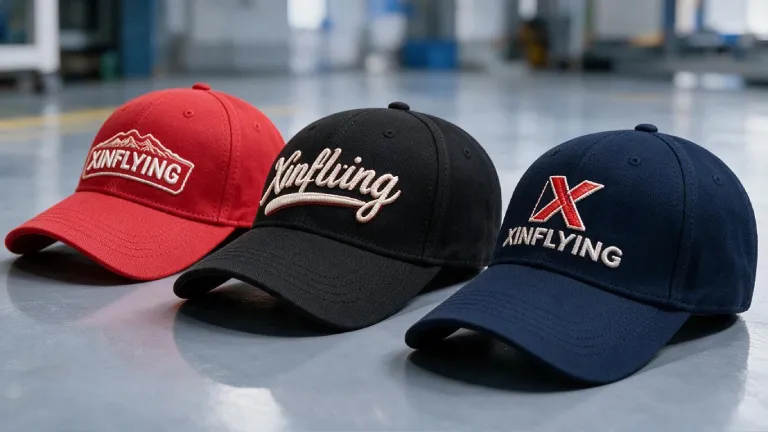
Comment fonctionne la broderie 3D en relief traditionnelle à l'aiguille ?
- Le motif est numérisé sous forme de fichier de points spécialement conçu pour la broderie en relief, en tenant compte de l'emplacement de la mousse et de la densité des points.
- Une sous-couche en mousse est placée sur le chapeau, au niveau de la zone de conception.
- Une machine à broder à plusieurs aiguilles réalise le motif, en compressant la mousse pour lui donner un relief au fur et à mesure qu'elle coud.
- L'excédent de mousse est découpé, ne laissant que le motif en relief et surpiqué.
Les casquettes posent des défis particuliers à cette méthode : un espace de broderie limité, une surface courbe instable et des coutures susceptibles de déformer les points de broderie. C'est pourquoi il existe des machines à broder spécialement conçues pour les casquettes, dotées de cadres dédiés, distinctes des machines à broder pour tissus plats.
Comment fonctionne l'impression 3D par broderie DTF UV ?
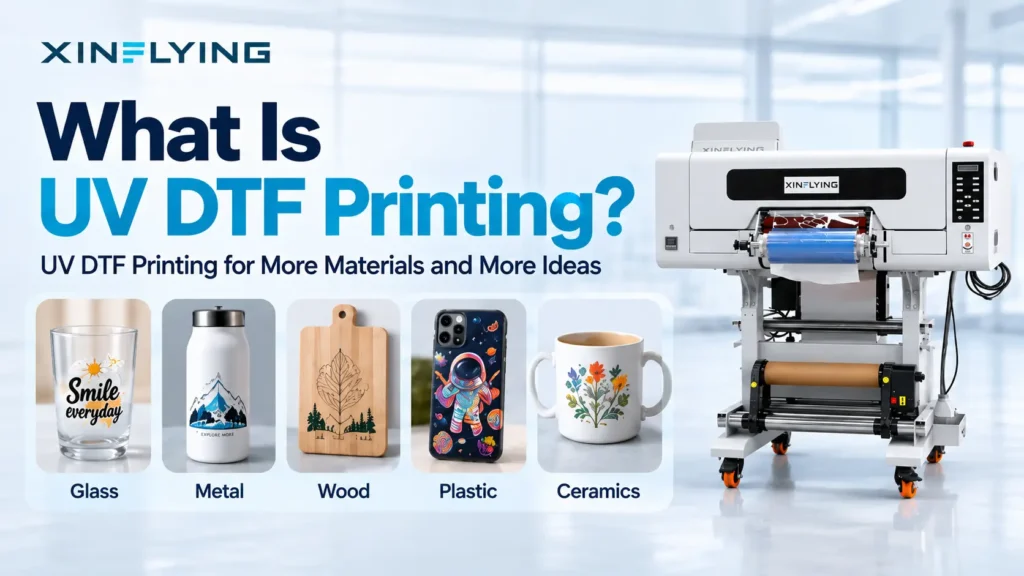
La broderie 3D UV DTF est une technique relativement récente qui ne nécessite aucun fil. À la place, on utilise une imprimante UV DTF — comme Imprimante de broderie 3D UV DTF 600S de Xinflying— couches Encre CMJN, à l'encre blanche et au vernis UV sur un film de transfert pour créer une surface texturée et en relief. Une fois imprimé, le motif est appliqué sur la casquette de la même manière qu'un autocollant DTF UV : il suffit de le presser, sans couture, sans numérisation en fichiers de couture ni sous-couche en mousse.
- Comme il s'agit d'un procédé d'impression, les motifs en couleur, les dégradés et les détails fins sont tous faciles à reproduire.
- La configuration en fonction du motif n'entraîne aucun coût par couleur, contrairement aux changements de fil sur une machine à broder.
- La surface courbe du chapeau ne pose pas autant de problèmes que pour la broderie, car le motif est appliqué sous forme de transfert souple.
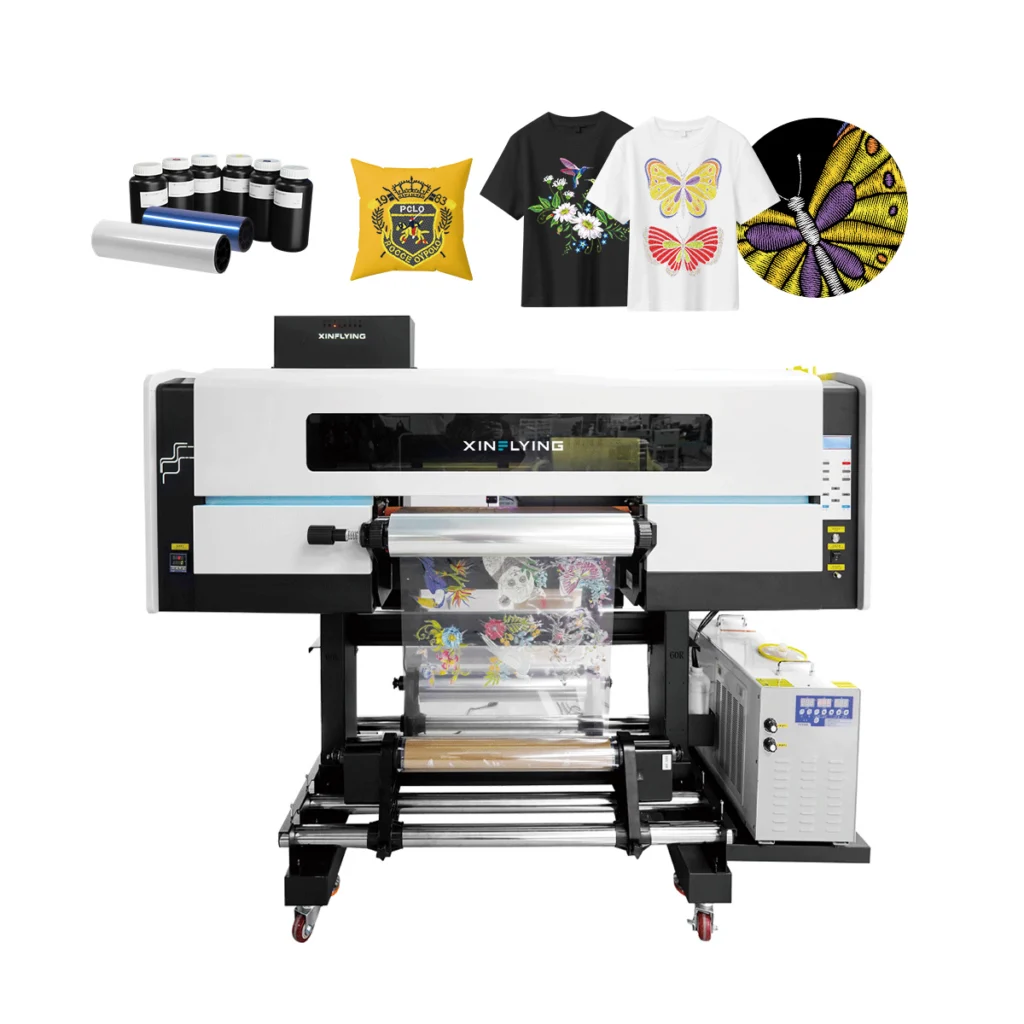
Imprimante UV Xinflying - 600s
L'imprimante UV Xinflying 600s est une imprimante intégrée de nouvelle génération qui combine la broderie simulée en 3D et la technologie d'impression DTF (Direct to Film).
Comparaison des deux méthodes
- Coût initial : les machines à broder à plusieurs aiguilles représentent généralement un investissement initial plus important qu'une imprimante UV DTF de capacité de production comparable.
- Complexité des motifs : la broderie 3D UV DTF permet de réaliser plus facilement des motifs en couleur et de qualité photographique ; la broderie traditionnelle est quant à elle limitée par les couleurs de fil et la densité des points.
- Délai d'exécution : les transferts UV DTF peuvent être imprimés et appliqués plus rapidement pour chaque motif, puisqu'il n'y a pas d'étape de numérisation en fichier de broderie.
- Valeur perçue : la broderie traditionnelle au fil est souvent perçue comme une finition haut de gamme et bien établie pour les produits dérivés de marques d'entreprise ou d'équipes.
- Durabilité : la broderie au fil a fait ses preuves depuis des décennies en matière de résistance aux lavages et à l'usure ; la durabilité de la broderie 3D UV DTF dépend de la qualité de l'encre et de l'adhésif et constitue, en comparaison, une technologie plus récente.
Quelle méthode convient le mieux à votre entreprise de chapeaux ?
Si votre activité repose sur la vente d’articles de marque haut de gamme, d’uniformes d’entreprise ou de tenues d’équipe pour lesquels un rendu de broderie traditionnel est attendu, une machine à broder à aiguilles reste le choix incontournable. Si vous dirigez une entreprise d’impression à la demande ou de cadeaux personnalisés qui nécessite des délais d’exécution rapides, des motifs en couleur et un faible coût d’équipement pour démarrer, l’impression par broderie 3D UV DTF mérite d’être testée comme alternative permettant une mise sur le marché plus rapide.
Pour les entreprises qui s'intéressent à la technologie UV DTF, l'imprimante intégrée XF-600S 3D Embroidery & UV DTF combine l'impression de textures de type broderie 3D et l'impression DTF standard sur une seule machine de 24 pouces, ce qui permet de proposer ces deux finitions sans avoir recours à deux équipements distincts.
Foire aux questions
Non, et il est important de bien comprendre la différence. La broderie 3D traditionnelle en relief utilise du fil et une sous-couche en mousse cousue à l'aide d'une machine à aiguille, ce qui permet de créer un motif en relief composé de véritables fibres de tissu. La broderie 3D UV DTF est un transfert imprimé qui utilise plusieurs couches d'encre UV pour simuler un aspect en relief et texturé similaire, appliqué sur la casquette plutôt que cousu dedans.
La broderie traditionnelle au fil est généralement considérée comme plus durable à long terme, car elle est physiquement tissée dans le tissu et a fait ses preuves depuis des décennies en termes de résistance aux lavages et à l'usure. La broderie 3D UV DTF est plus récente, et sa durabilité dépend de l'encre, de la qualité de l'adhésif et de la technique d'application ; il est donc recommandé de la tester sur le tissu spécifique de votre casquette.
La broderie 3D UV DTF se caractérise généralement par un coût d'équipement et un encombrement réduits ; elle ne nécessite pas de numérisation des motifs en fichiers de points et permet de reproduire des dégradés en couleur et des détails de qualité photographique, ce qui serait difficile, voire impossible, avec du fil. C'est souvent un moyen plus rapide de tester des motifs ou d'honorer des commandes personnalisées de petite taille.
Oui, comme il s'agit d'un procédé d'impression utilisant les couleurs CMJN ainsi que des couches d'encre blanche et de vernis, la broderie 3D UV DTF permet de reproduire des motifs en couleur et des dégradés qui nécessiteraient de nombreux changements de couleur de fil sur une machine à broder traditionnelle.
Oui, comme il s'agit d'un procédé d'impression utilisant les couleurs CMJN ainsi que des couches d'encre blanche et de vernis, la broderie 3D UV DTF permet de reproduire des motifs en couleur et des dégradés qui nécessiteraient de nombreux changements de couleur de fil sur une machine à broder traditionnelle.
Ressources connexes
Référence externe — Broderie — Wikipédia