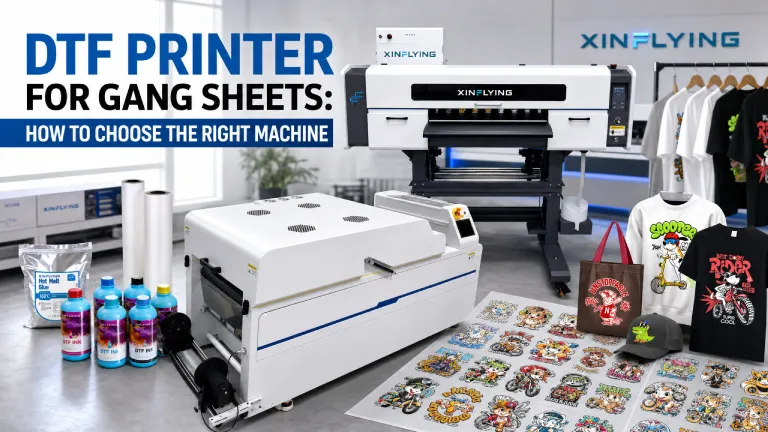
Las hojas en serie son la forma en que la mayoría de los talleres de DTF rentables gestionan realmente su negocio: imprimiendo docenas de diseños pequeños en una sola hoja continua, en lugar de malgastar película imprimiendo un diseño cada vez. Pero no todos los Impresora DTF está diseñado para ello. A continuación te explicamos en qué debes fijarte y cómo configurar un flujo de trabajo con hojas de grupo que realmente te permita ahorrar dinero.
¿Qué es una hoja de impresión DTF en serie?
Una hoja de rollo es un rollo o una hoja de Lámina de transferencia DTF en la que se incluyen varios diseños dispuestos juntos —diferentes logotipos, diferentes tamaños e incluso diferentes pedidos de clientes— en lugar de imprimir un solo diseño por hoja. Dado que el precio de las hojas agrupadas suele cobrarse por pie cuadrado en lugar de por diseño, encajar varios diseños de forma compacta en una sola hoja reduce el desperdicio de película y agiliza la producción.
Esto es especialmente importante para los talleres que gestionan pedidos de lotes pequeños o mixtos: los logotipos en el lado izquierdo del pecho, los estampados en las mangas, los diseños en la espalda y las peticiones individuales de los clientes se agrupan y se imprimen de una sola vez, en lugar de tener que poner en marcha la máquina una y otra vez para trabajos muy pequeños.
Por qué es importante elegir la impresora DTF adecuada para las hojas agrupadas
Una impresora que funciona bien con diseños individuales de tamaño completo puede convertirse en un cuello de botella en cuanto empiezas a agrupar varios diseños pequeños. Hay algunos aspectos que cambian cuando las hojas agrupadas pasan a formar parte de tu flujo de trabajo:
- El ancho de impresión limita directamente el número de diseños que caben por fila: una impresora más estrecha implica más filas, una mayor longitud de película y un tiempo de entrega más largo.
- Tinta blanca La estabilidad cobra mayor importancia, ya que en una hoja de tirada suelen mezclarse diseños destinados tanto a prendas claras como a oscuras en una misma tirada.
- La gestión de la película en bobina reduce el tiempo de inactividad que supone recargar hojas entre trabajos de impresión, lo que se acumula rápidamente cuando se trata de grandes volúmenes de hojas agrupadas.
- Para mantener un color uniforme a lo largo de una tirada larga y continua, es necesario que la circulación de la tinta sea estable y que el cabezal de impresión esté en buen estado.
Características técnicas clave que hay que tener en cuenta en una impresora DTF de hojas múltiples
- Ancho de impresión de al menos 24 pulgadas: este es el mínimo práctico para poder incluir varios diseños pequeños en cada fila.
- Configuración de doble cabezal o de múltiples cabezales (p. ej.,. dos cabezales de impresión i3200) para una mayor velocidad de impresión en hojas largas y continuas.
- Manejo de película rollo a rollo, en lugar de la carga de hojas sueltas.
- Un sistema activo de circulación y agitación de la tinta blanca para evitar la sedimentación durante tiradas prolongadas.
- Software RIP con herramientas de anidamiento o maquetación que ayudan a organizar los diseños de forma eficiente y a reducir el desperdicio de película.
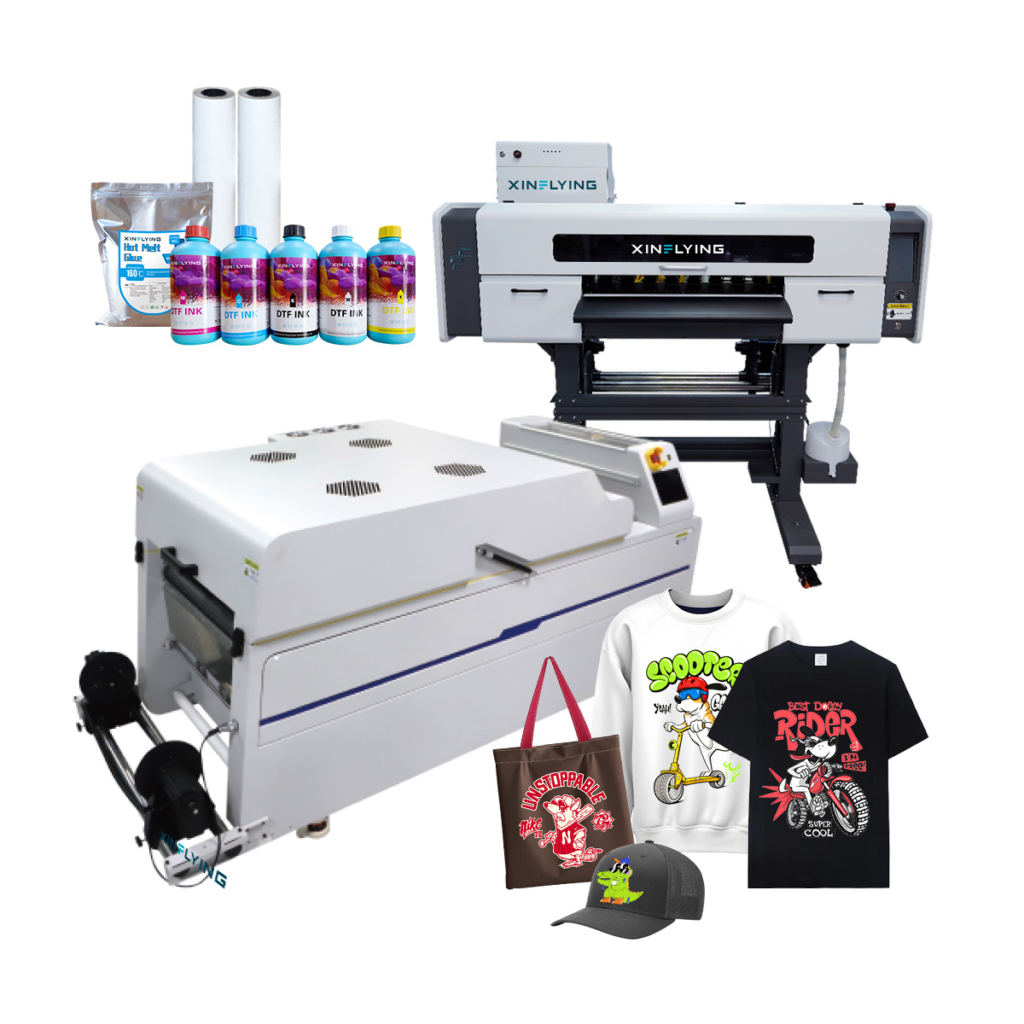
Impresora DTF Xinflying - 704e
Impresora DTF de 24″ con 4 cabezales de impresión Epson i3200-A1 para la producción a alta velocidad y en grandes volúmenes de láminas agrupadas y transferencias para prendas de vestir.
Cómo adaptar el ancho de la impresora al volumen de tus hojas agrupadas
La gama de impresoras DTF de Xinflying abarca varios anchos de impresión, por lo que la mejor opción inicial dependerá del volumen de tus pedidos y del número de diseños que sueles agrupar en cada hoja:
| Ancho de impresión | Configuración típica del cabezal | Ideal para |
| 12 pulgadas | XP600 individual | Pruebas de maquetación de hojas de tirada, hojas con solo el logotipo, tiradas muy reducidas |
| 16,5 pulgadas (A2) | Dual i1600 (p. ej., XF-450PRO) | Planchas de impresión en serie de tiradas pequeñas en las que se combinan varios diseños por tirada |
| 24 pulgadas | Dual i3200 (p. ej.,. XF-702E) | Producción estándar de planchas en serie: la mayoría de los talleres empiezan por aquí |
| 32 pulgadas | i3200 multicabezal | Talleres con un mayor volumen de trabajo que procesan hojas múltiples a diario |
| 48 pulgadas | i3200 multicabezal | Producción a escala industrial, hojas agrupadas de gran formato o con gran variedad de productos |
Para los talleres que se están iniciando en la producción de planchas múltiples, el Impresora DTF Xinflying - 450PRO es un punto de partida habitual: su anchura A2 (16,5 pulgadas) y su configuración de doble cabezal permiten gestionar bien las hojas agrupadas en lotes pequeños antes de que un taller dé el salto a una máquina más ancha y de mayor volumen.
Cómo crear un flujo de trabajo eficiente para las hojas de trabajo en grupo
- Diseña y agrupa: crea los diseños en programas como Illustrator o Photoshop, colocándolos lo más juntos que te permita tu software RIP para minimizar el desperdicio de película.
- Exportar en CMYK: la impresión DTF se realiza en CMYK + blanco, por lo que los archivos deben prepararse y revisarse en cuanto al color en CMYK antes de enviarlos a imprimir.
- Impresión en una sola pasada continua: las impresoras de alimentación por rollo permiten imprimir toda la hoja de tirada sin tener que detenerse para recargar la película.
- Polvo y curado: aplica el polvo adhesivo de manera uniforme por toda la lámina y, a continuación, deja que se seque antes de guardarla o prensarla.
- Cortar y clasificar: una vez curados, corta los diseños individuales y clasifícalos por pedido, tamaño o cliente.
Rentabilidad: por qué las hojas múltiples permiten ahorrar dinero
Dado que las hojas agrupadas se tarifican y producen por pie cuadrado de película, en lugar de por diseño individual, las maquetaciones bien agrupadas reducen directamente el coste por diseño. Un flujo de trabajo de hojas agrupadas bien planificado suele implicar:
- Se desperdicia menos película en torno a los diseños pequeños en comparación con la impresión de un diseño por hoja.
- Menos arranques y paradas de la máquina, ya que se imprimen varios pedidos en una sola tirada continua.
- Menor tiempo de mano de obra por diseño, ya que las fases de pulverización, curado y corte se realizan una sola vez para toda la lámina, en lugar de por cada diseño.
La contrapartida es el ancho de impresión: una impresora más estrecha obliga a utilizar más hojas agrupadas más cortas en lugar de menos hojas más largas, por lo que el ancho suele ser la primera especificación que comprueban los talleres a la hora de adquirir una impresora DTF compatible con hojas agrupadas.
Preguntas frecuentes
La mayoría de los talleres que trabajan con hojas agrupadas para prendas de vestir necesitan una impresora DTF de al menos 24 pulgadas de ancho. Este ancho permite colocar cómodamente varios diseños pequeños —logotipos en el lado izquierdo del pecho, estampados en las mangas, diseños en los bolsillos— uno al lado del otro en una sola tirada continua, que es precisamente el objetivo de agrupar los diseños.
Sí, una impresora DTF de 16,5 pulgadas (A2) sigue permitiendo agrupar varios diseños en una misma hoja; simplemente cabe un número menor de diseños por fila que en una máquina de 24 pulgadas o más ancha. Se trata de un punto de partida razonable para pequeños talleres antes de dar el salto a un formato más ancho.
La impresión con alimentación por bobina (roll-to-roll) suele ser más eficiente para las hojas agrupadas, ya que permite imprimir un diseño continuo sin tener que recargar la película entre tiradas, lo que reduce el tiempo de inactividad y el desperdicio de material. Las impresoras de hojas sueltas funcionan bien para trabajos de volumen reducido u ocasionales con hojas agrupadas.
La mayoría de los talleres crean maquetaciones de hojas múltiples en programas de diseño como Adobe Illustrator o Photoshop y, a continuación, exportan el archivo en CMYK para el software RIP de la impresora. Algunos programas RIP para impresoras DTF también incluyen herramientas de encajado integradas que organizan automáticamente varios diseños para minimizar el desperdicio de película.
Las hojas de impresión suelen combinar diseños destinados tanto a prendas claras como oscuras, por lo que es fundamental contar con una capa base de tinta blanca estable para garantizar una opacidad uniforme en toda la hoja. Busca una impresora que cuente con un sistema de circulación activa de la tinta blanca, ya que esta se sedimenta más rápido que el CMYK y puede obstruir los inyectores si permanece inactiva.
Las hojas agrupadas suelen consumir menos película y tóner por diseño que la impresión de un solo diseño por hoja, ya que no se deja espacio sin utilizar alrededor de un único gráfico pequeño. El ahorro exacto depende de lo ajustados que estén los diseños entre sí durante la maquetación.
También te puede interesar: