DTF RIP software determines how artwork, CMYK data, white ink, and print settings reach the printer. If operators must jump between design software, manually build white-ink channels, export several files, and check settings in different windows, every job creates more opportunities for delay or error.
DTF RIP software converts artwork into print-ready data, controls CMYK and white-ink channels, applies color and output settings, and sends the job to the printer. XF SmartPrint adds built-in color controls, automated white-layer creation, channel previews, and workflow options designed to reduce setup steps in daily DTF production.
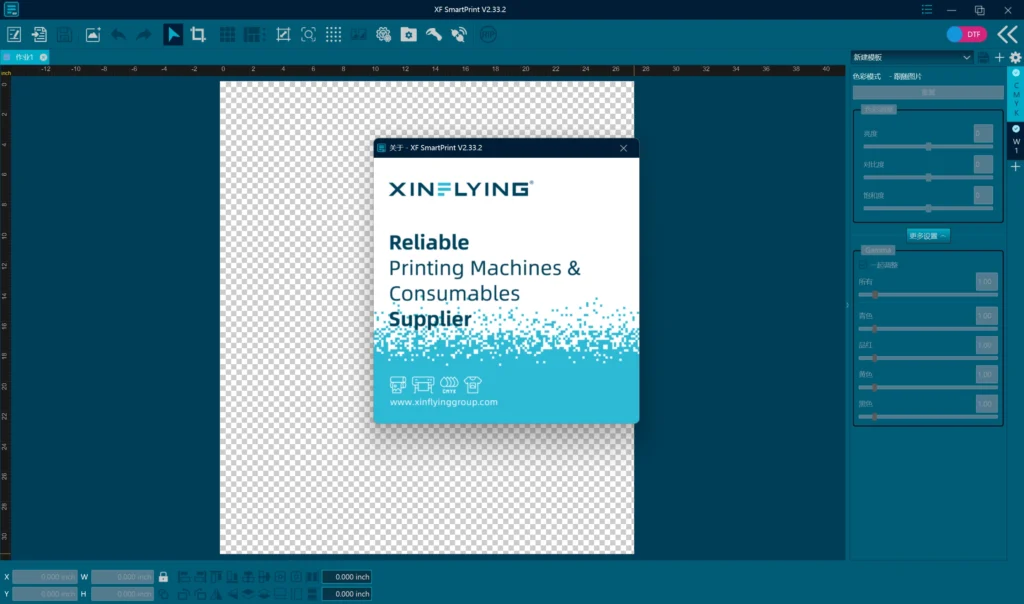
This guide explains nine XF SmartPrint features and, more importantly, what each one means for a custom apparel print shop. It also covers the compatibility and licensing questions you should answer before choosing a RIP package.
Product note: This article is based on Xinflying’s XF SmartPrint presentation and first-party operation manual. The manual text uses the base-software name “XF SmartPrint,” while its screenshots show the Xinflying-branded XF SmartPrint interface. Available functions vary by software edition, dongle authorization, printer configuration, and integration scope. Confirm the supplied build and license before purchase.
What Does DTF RIP Software Do?
DTF RIP software sits between the artwork and the printer. It interprets the source file, separates or generates the required ink channels, applies color and resolution settings, arranges the job, and converts the result into data the printer can output.
That role matters because DTF printing is not a standard office-printing process. A job may require:
- CMYK image data.
- A controlled white underbase.
- Choke, spread, or edge settings for the white layer.
- Color adjustments or ICC workflow settings.
- Mirroring, sizing, positioning, and nesting.
- Printer-specific resolution, pass, and ink-channel settings.
- A preview that helps the operator catch setup problems before printing film.
Good RIP software does not guarantee correct color or eliminate operator training. It gives the shop a controlled place to prepare, inspect, and send jobs.
The operation manual lists TIF/TIFF, JPG/JPEG, PNG, BMP, PDF, and AI as supported artwork formats. File acceptance does not guarantee that every transparency, font, overprint, or color-space condition will output as intended, so representative customer files should still be preflighted and tested.
XF SmartPrint Feature Overview
| XF SmartPrint feature | Practical value for a print shop |
|---|---|
| Simplified interface | Helps operators learn the basic workflow without navigating several separate tools |
| Multiple interface languages | Makes training and daily use more accessible for multilingual teams |
| Built-in color adjustments | Lets operators make supported image corrections without repeated export-and-import steps |
| Multiple white-layer generation methods | Reduces the need to build every white spot channel manually in external software |
| White and spot-channel preview | Helps operators inspect channel data and generated output before committing film and ink |
| DTF and DTG authorizations; UV version described in product materials | Matches the RIP environment to the licensed printing technology and application |
| Hot-folder, scanning, queue, and integration options | Supports more structured job intake and production handling |
| Adobe PDF Print Engine 6 interpretation | Provides a standardized path for processing PDF artwork in supported editions |
| License-dongle upgrade mechanism | Allows eligible version or function authorization to be updated through the license device |
These functions are most useful when they are matched to the printer, printhead, ink configuration, color workflow, and production volume. A long feature list cannot compensate for an incompatible driver or an edition that lacks the functions your shop needs.
1. A Simplified Interface Lowers the Training Barrier
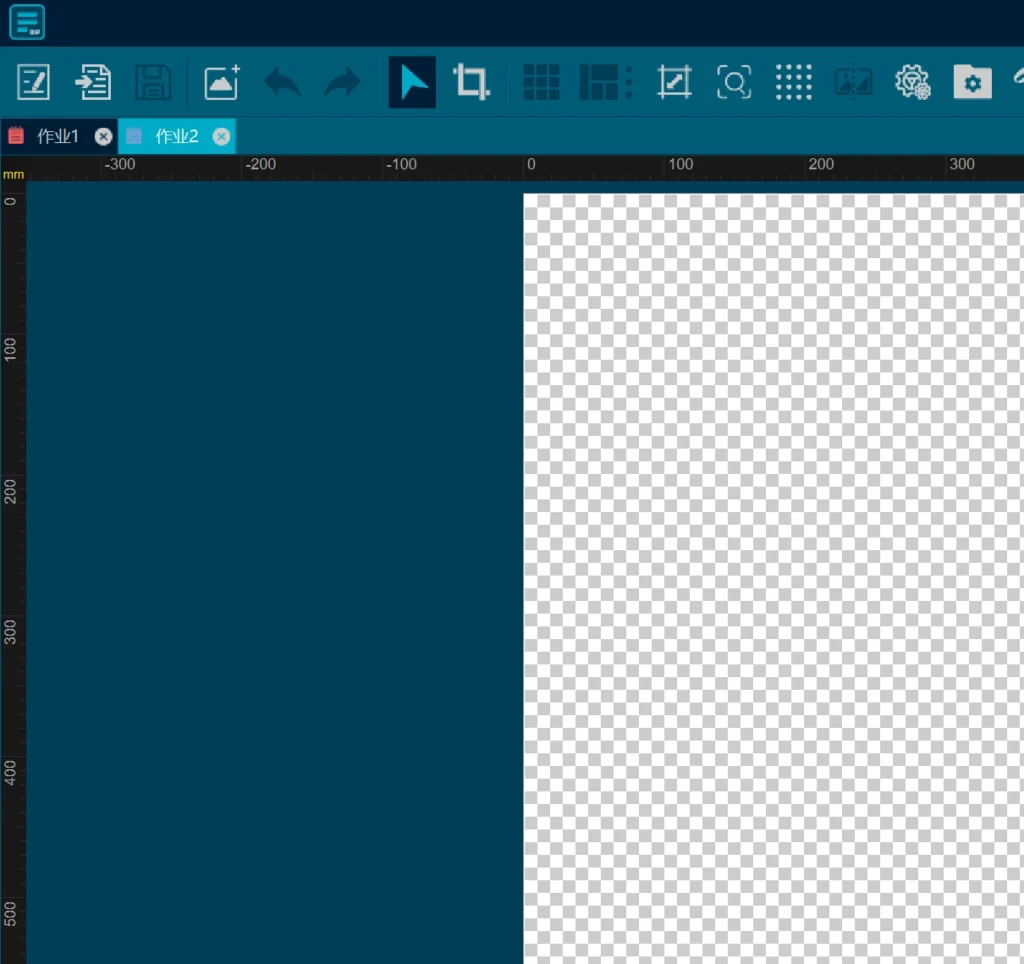
RIP software often combines technical controls for color, channels, resolution, nesting, and printer output. That capability is useful, but an overloaded interface can slow down a new operator and make routine work harder to standardize.
XF SmartPrint uses a streamlined workspace that keeps the main artwork area, job controls, and channel settings visible in one environment. The goal is not to remove every technical decision. It is to make the normal production path easier to follow.
For a small print shop, a clearer interface can help with:
- Training a second operator.
- Documenting a repeatable job setup.
- Reducing unnecessary menu switching.
- Finding common controls during production.
- Keeping the operator focused on the current print file.
Ease of use should still be verified with a real file. Ask the supplier to demonstrate the exact steps for importing artwork, generating the white layer, applying the correct printer mode, previewing channels, and sending the job.
2. Multiple Languages Support Multilingual Production Teams
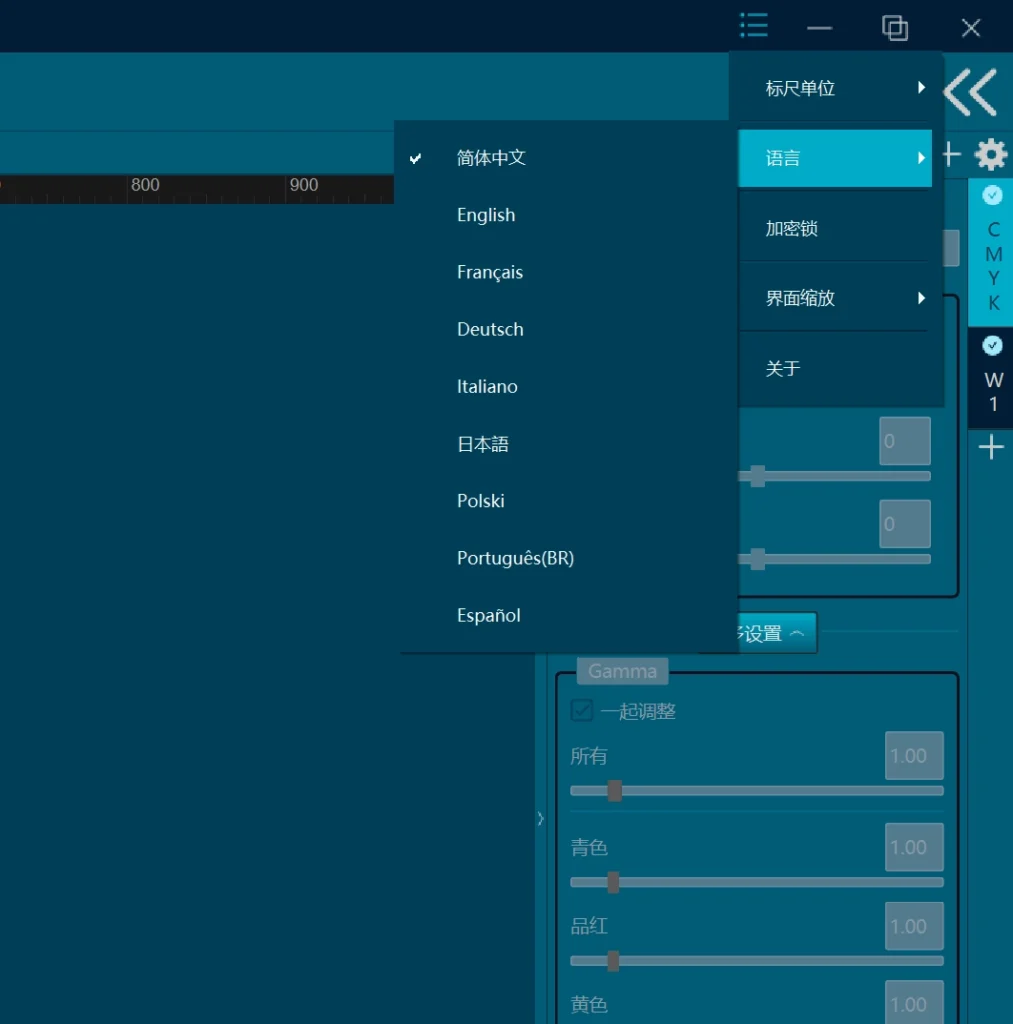
The XF SmartPrint operation manual confirms nine interface languages: Simplified Chinese, English, French, German, Italian, Japanese, Polish, Brazilian Portuguese, and Spanish. The product presentation lists Russian, Arabic, and Korean as planned additions, but the available materials do not confirm that those three are currently released.
Language support can make onboarding easier when a shop owner, installer, and operator do not all use the same first language. It also reduces the risk of training someone on translated screenshots while the live interface uses different labels.
Confirm the languages available in the build supplied with your printer. A language shown in development should not be treated as available until it appears in the licensed version.
3. Built-In Color Adjustments Reduce Software Handoffs
XF SmartPrint includes image color controls inside the RIP environment. The documented tools cover common adjustments such as brightness, contrast, saturation, and channel-level control.
This can help an operator make a supported production correction without exporting the artwork, opening another program, saving a new file, and importing it again. Fewer handoffs make file control simpler, especially when a shop processes many small orders.
Built-in controls do not replace full design or prepress software. Complex retouching, vector editing, font correction, transparency repair, and customer-artwork reconstruction may still require the original design application. The practical benefit is having common output-oriented corrections close to the print settings.
For repeat work, record approved values rather than adjusting by eye every time. Color decisions should also be evaluated with the correct ink, film, powder, curing conditions, heat-press settings, garment color, and ICC workflow.
4. Smart White-Layer Generation Simplifies DTF File Preparation
White ink is a central part of DTF production because it creates the underbase behind the CMYK image. Preparing that underbase manually can require a spot-color channel, careful edge control, and extra file-preparation steps.
XF SmartPrint provides multiple white-layer generation methods and can create the white-ink layer inside the RIP workflow. This can reduce the need to construct every spot channel manually in Photoshop or another image editor.
The manual documents four white-generation modes:
- Fill all area: fills the full selected image area with white.
- 100% white under any color pixel: creates a solid white underbase wherever color data is present.
- White gradient positive: varies white with the image data in the positive direction.
- White gradient negative: varies white in the opposite direction.
The software also provides four-direction white-channel shrink or expand controls, plus threshold and detail-protection settings. These controls can help manage the relationship between the color image and white underbase, but the correct values depend on the artwork and physical print system.
The operator still needs to choose the right method for the artwork. A solid logo, a photograph with transparent edges, and distressed artwork may need different white settings. Check:
- Whether white is generated under every printed color or only selected areas.
- The choke or spread around the white layer.
- How transparency and soft edges are interpreted.
- Whether pure white objects should print as CMYK, white ink, or both.
- How the result looks on the target garment after curing and pressing.
Automated generation saves preparation work only when the preview and test output are reviewed.
5. Channel Preview Helps Catch Setup Problems Before Printing
XF SmartPrint provides direct color and spot-channel preview in the workspace. The manual also specifically describes previewing generated PRN or TIF output. These views give the operator a chance to inspect channel data, underbase coverage, edge behavior, and job layout before production.
A useful preflight check includes:
- Confirming that the artwork is mirrored when the workflow requires it.
- Checking that white ink appears under the intended colors.
- Looking for missing details or unwanted white areas.
- Inspecting the edge between CMYK and white.
- Verifying the job size, position, and orientation.
- Confirming the selected printer mode and ink channels.
The preview helps detect file and channel problems; it is not a guaranteed simulation of the final garment. Actual color and hand feel also depend on profiling, ink limits, film, powder, curing, transfer settings, fabric, and operator technique.
6. Licensed Functions Match Different Printing Technologies
The operation manual confirms DTF and DTG as dongle-controlled functions, and the interface can switch between them only when the corresponding authorization is present. Xinflying’s product presentation also describes a UV version. Because the available manual does not document the UV workflow in the same detail, confirm the exact UV product, functions, and license directly with the supplier.
For a DTF shop, choose the DTF edition and confirm that it supports:
- The exact printer model and controller.
- The installed printhead configuration.
- CMYK and white-ink channel mapping.
- The required print widths and resolutions.
- The modes used for normal production.
- The ICC profiles supplied for the ink, film, and printer combination.
Do not assume that a license for one printing technology automatically includes the others. If your business operates DTF and UV equipment, ask whether you need separate editions, separate dongles, or additional authorizations.
7. Job Intake and Queue Tools Support More Structured Production
The manual documents local workflow tools that can reduce repetitive job handling:
- A hot folder that generates PRN output without manually loading each image.
- Scanner support for scan-gun-driven job handling.
- An integrated print management center for viewing, editing, reordering, canceling, and monitoring queued jobs.
- Printer-terminal setup through IP address and port configuration, with driver installation or import.
- Printer-status and ink-level views within the management interface.
The manual also describes three job-release modes: manual printing after RIP, automatic printing after RIP, and printing while job data is being sent or processed. Which mode is appropriate depends on the printer, network, operator controls, and risk tolerance.
Xinflying’s presentation additionally describes POD or MES order connections and a standardized network-interface path. Those integration claims are project-specific in the available evidence; the exact API, data exchange, and implementation scope are not documented in the manual.
Integration claims need a technical scope, not just a checkbox. Before planning an automated workflow, ask:
- Which XF SmartPrint edition includes the required function?
- Is the connection native, configured by Xinflying, or developed by a third party?
- Which file formats, job metadata, and status messages are supported?
- How are printer mode, quantity, size, and color settings assigned?
- What happens when a file fails preflight?
- Can the system prevent the same job from printing twice?
- Who supports the connection after installation?
Keep manual approval in the process until the automated path has been tested with real orders.
8. Adobe PDF Print Engine Supports PDF Interpretation
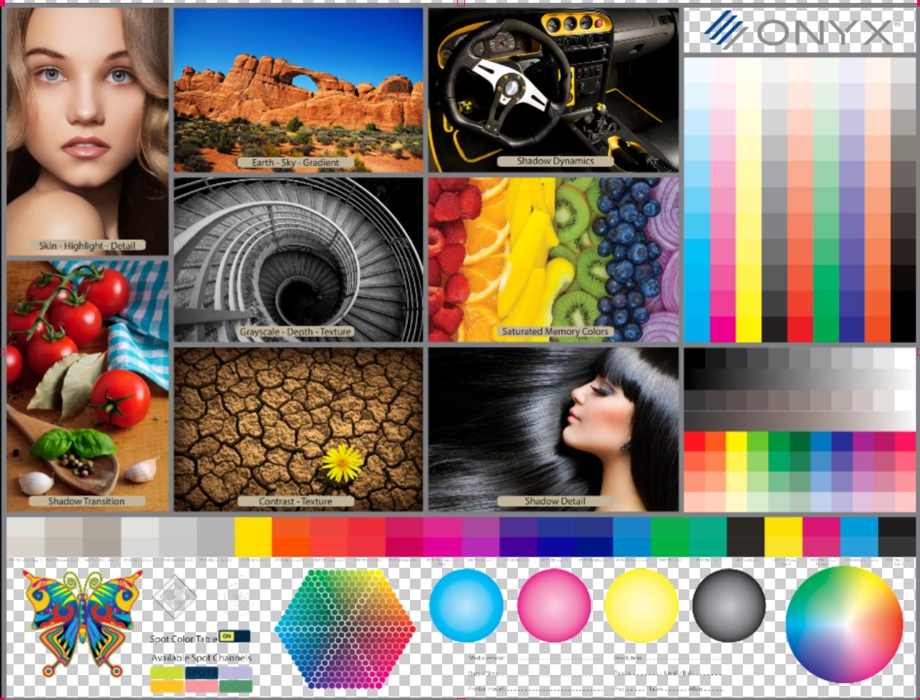
Xinflying’s product presentation identifies Adobe PDF Print Engine 6, commonly called APPE 6, for standardized PDF processing. The operation manual separately confirms that the software’s About screen displays an APPE Engine license. Together, these sources support APPE-based interpretation, but they do not prove that APPE 6 is included in every supplied XF SmartPrint edition.
PDF interpretation matters when artwork contains transparency, vector elements, embedded color information, or content created across different design applications. A consistent interpretation path can help keep the file-processing workflow predictable across operators and devices.
APPE does not remove the need for preflight. Fonts, missing images, unsuitable color spaces, low-resolution raster content, overprints, and unexpected transparency can still produce an incorrect job. Ask for a demonstration using the types of customer files your shop receives most often.
Because software components can vary by edition and release, confirm the APPE version and authorization included in the XF SmartPrint license supplied with your printer.
9. License-Dongle Upgrades Make Function Authorization More Flexible
XF SmartPrint uses a license-dongle mechanism that can authorize eligible software versions or functions through an upgrade process. The intended benefit is a simpler way to update the licensed capability without automatically replacing the entire software package.
The manual states that the standard version has a 70 cm print-width limit and can be upgraded to a specified width or unlimited width. It also shows dongle-controlled authorization for functions including DTF, multichannel and white ink, DTG, hot folder, cutting, ICC, scanner, server, RPC, color correction, and engineer mode. A function appearing in the interface or manual should not be treated as included until it is shown as authorized on the supplied dongle.
Before purchase, get the license terms in writing:
- Which functions are included on delivery?
- Is the license perpetual, time-limited, or tied to a support plan?
- Which updates are included?
- Which upgrades require an additional fee?
- Can a damaged or lost dongle be replaced?
- Is the license locked to one computer or printer?
- What is the recovery process if the production computer fails?
The dongle is part of the production system. Store its license information and support contact details where the shop can access them during a computer replacement or urgent repair.
Who Is XF SmartPrint DTF RIP Software For?
XF SmartPrint is most relevant to a print shop that wants the RIP software and printer configuration supplied as one supported workflow. It may be a good fit when the shop needs:
- White-ink layer generation inside the RIP.
- A preview of white or spot-color channels.
- Common color adjustments near the output settings.
- A simpler interface for training operators.
- Multilingual interface options.
- Hot-folder, scan, POD, or MES workflow possibilities.
- A software edition selected for DTF production.
It may be less suitable if the shop needs compatibility with an unverified third-party printer, a specific external automation platform, an operating system that has not been confirmed, or an advanced prepress function that has not been demonstrated. Compatibility should be proven before the purchasing decision.
What Should You Confirm Before Choosing DTF RIP Software?
Use this checklist during a supplier demonstration:
| Area | Question to ask |
|---|---|
| Printer compatibility | Does this exact build support my printer model, board, printheads, width, and ink channels? |
| Computer requirements | Which operating system, processor, memory, storage, ports, and network settings are required? |
| License | Which dongle functions are included, is the 70 cm standard width sufficient, and what costs apply to a wider license, future upgrades, or replacement? |
| Color workflow | Which ICC profiles are supplied, and who creates or updates them? |
| Tinta branca | Which white-generation methods, choke settings, and preview tools are included? |
| File preflight | How does the supplied build handle the shop’s real TIF/TIFF, JPG/JPEG, PNG, BMP, PDF, and AI files? |
| Job release | Which of the three documented print modes is recommended for this printer and workflow? |
| Automation | Which hot-folder and scanner functions are authorized, and what do any POD, MES, or network interfaces exchange in practice? |
| Training | Will the supplier train operators with the shop’s own files and production modes? |
| Suporte | Who handles software setup, profile issues, license recovery, and printer-output troubleshooting? |
Do not evaluate RIP software from screenshots alone. Run a sample from import to transferred garment and record the settings used.
DTF RIP Software Is One Part of a Stable Production System
RIP software controls file preparation and output, but it cannot correct an unstable ink path, unsuitable room conditions, worn maintenance parts, poor consumables, or incorrect curing and pressing.
Evaluate the RIP together with the printer, white-ink circulation, filtration, printhead protection, powder shaker, curing system, film, ink, powder, heat press, color profiles, operator training, and technical support.
Across the Xinflying DTF printer range, complete configurations can include the printer, finishing equipment, consumables, and RIP software options. Xinflying also provides English operation manuals, remote diagnostics, 24/7 technical support, and U.S.-based local service.
If you are comparing the complete equipment package, use the DTF printer buying guide to evaluate production volume, print width, white-ink management, maintenance, operating cost, consumables, and supplier support alongside the RIP.
Perguntas frequentes
The best DTF RIP software is the one verified for your exact printer, printheads, ink channels, operating system, profiles, and production workflow. Compare white-layer controls, channel previews, color management, job handling, licensing, training, and support. A popular package is not useful if it cannot drive your configuration correctly.
Yes, a commercial DTF workflow normally needs RIP software to interpret artwork, control CMYK and white ink, apply printer modes and color settings, and send the job to the printer. The exact software and edition depend on the printer and controller.
XF SmartPrint can generate white layers and make supported color adjustments inside the RIP, reducing the need to use Photoshop for every production step. It does not replace full artwork creation, vector editing, retouching, font correction, or complex prepress repair.
Yes. XF SmartPrint documentation shows direct preview of color and spot-channel data, and the manual describes previewing generated PRN or TIF output. Operators should use these views to check underbase coverage and edges, then confirm the result with a printed and transferred sample.
The operation manual lists TIF/TIFF, JPG/JPEG, PNG, BMP, PDF, and AI. Complex PDF or AI files can still contain font, transparency, overprint, or color-space conditions that require preflight, so test the file types and design-app exports used in your actual workflow.
The manual documents four options: fill the full area, place 100% white under any color pixel, generate a positive white gradient, or generate a negative white gradient. Operators can also shrink or expand the white channel in four directions and adjust threshold and detail protection.
The documented hot folder can generate PRN output without manually loading each image. The print management center lets an operator view, edit, reorder, cancel, and monitor queued jobs. These functions require the corresponding license and a validated printer setup.
XF SmartPrint materials describe POD and MES order connection, a network-interface path, hot-folder batch processing, and scan-to-print options. The exact data exchange and implementation scope may depend on the edition and project, so confirm it with a technical workflow demonstration.
The operation manual confirms Simplified Chinese, English, French, German, Italian, Japanese, Polish, Brazilian Portuguese, and Spanish. The presentation lists Russian, Arabic, and Korean as planned additions, but their current availability is not confirmed.
No universal compatibility should be assumed. Ask Xinflying to confirm the printer model, controller, printheads, width, ink channels, operating system, profiles, and required production modes before selecting the software.
Choose the RIP and Printer as One Workflow
The most useful DTF RIP software is not the package with the longest feature list. It is the one your operators can use correctly, your printer can run reliably, and your supplier can support when the workflow changes.
Request a DTF printer quote and receive a configuration recommendation based on your artwork, applications, expected production volume, operator workflow, and RIP software requirements.