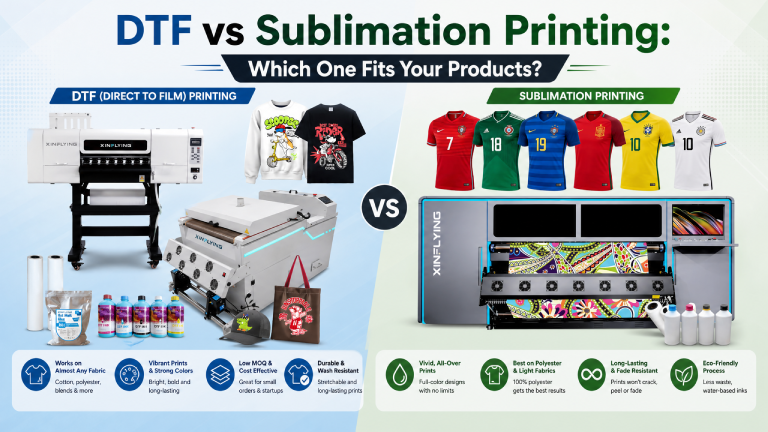
DTF vs sublimation is one of the most common questions among businesses printing on activewear, mugs, or all-over print apparel. Both produce vivid, full-color designs, but they’re built for very different materials — and picking the wrong one can mean a print that fades, cracks, or simply won’t stick.
What Is Sublimation Printing?
Sublimation uses heat to turn solid dye into gas, which then permanently bonds with polyester fibers (or a polymer coating on hard goods like mugs and phone cases). Because the ink becomes part of the material rather than sitting on top of it, sublimation prints have:
- Zero texture — you can’t feel the print at all
- Extremely vivid, long-lasting color that won’t peel or crack
- The ability to print edge-to-edge, ideal for all-over designs
The major limitation: sublimation only works on polyester or polyester-coated surfaces. On cotton, or on colored/dark garments, it doesn’t work — the dye needs white polyester to show up correctly, so dark or natural-fiber fabrics are off the table.
What Is Impression DTF?
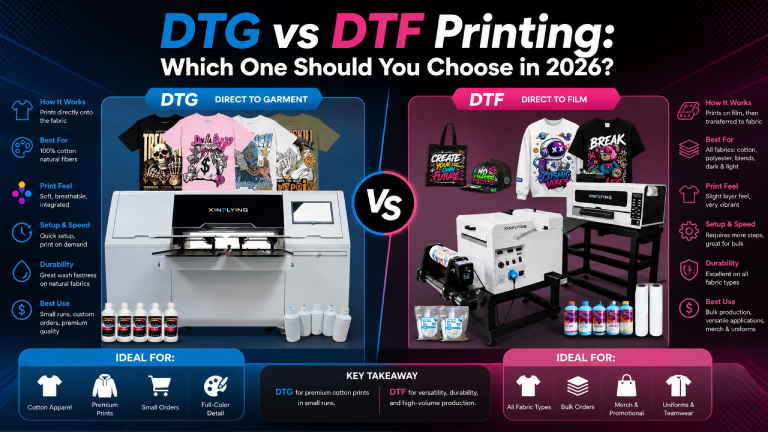
DTF (Direct-to-Film) prints a design onto film with a white ink base layer, then heat-presses it onto the garment as a transfer. Compared to sublimation, DTF:
- Works on virtually any fabric — cotton, polyester, blends, and dark colors included
- Includes its own white ink layer, so it prints just as well on black shirts as on white ones
- Has a slight texture, since the print sits as a thin layer on the fabric surface
Sublimation vs DTF: Side-by-Side
| Factor | Sublimation | DTF |
|---|---|---|
| Fabric required | Polyester or poly-coated only | Any fabric, any color |
| Feel | Zero texture | Slight texture |
| Dark garments | Poor — no white ink | Excellent — built-in white base |
| All-over prints | Excellent, edge-to-edge | Limited by film/press size |
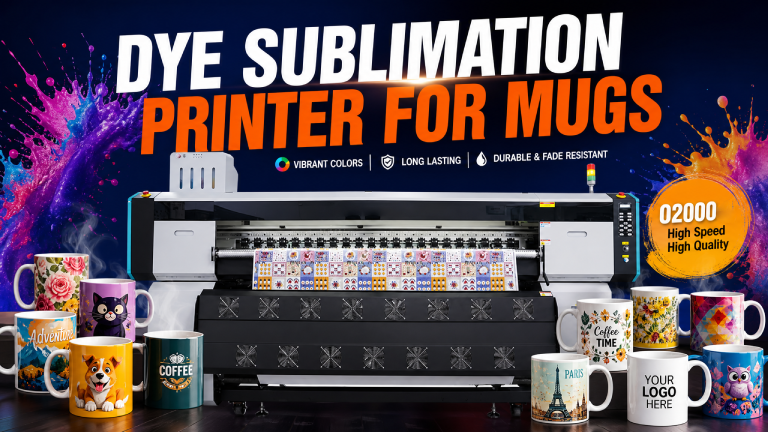
| Hard goods (mugs, cases) | Yes | No |
| Durability | Extremely high, dye becomes part of fiber | High, but can eventually peel if poorly applied |
What the Market Data Says
Sublimation isn’t a niche technique — it’s one of the largest segments in the entire digital textile printing industry. Grand View Research values the global dye sublimation printing market at roughly $16.4 billion in 2025, projecting growth to nearly $39 billion by 2033. Garments alone accounted for more than 62% of that revenue in 2025, according to Mordor Intelligence, which also notes that contract manufacturers who previously relied on screen printing are increasingly adopting digital sublimation lines specifically because it lets them handle unlimited colorways without added setup costs — the same setup-cost problem that pushes many print shops toward DTF instead of screen printing for small runs.
What’s notable is that sublimation’s growth is no longer confined to apparel. The same research shows meaningful expansion into automotive interior trim and soft signage, industries that share almost nothing with fashion except one requirement: durable, vivid, full-color printing on synthetic or coated surfaces. That cross-industry pull is a useful signal — when a printing method starts showing up in car interiors and trade show displays, it’s usually because the underlying durability and color performance have been validated well beyond apparel.
When flipping the search — Sublimation vs DTF, does the order change the answer?
Not really. Whether you search DTF vs sublimation or sublimation vs DTF, the decision comes down to one question: what are you printing on? These two methods aren’t really competitors so much as tools for different jobs.
Which Should You Choose?
Choose sublimation if you’re printing on:
- Polyester sportswear or performance fabrics
- All-over print garments
- Hard goods like mugs, tumblers, or phone cases
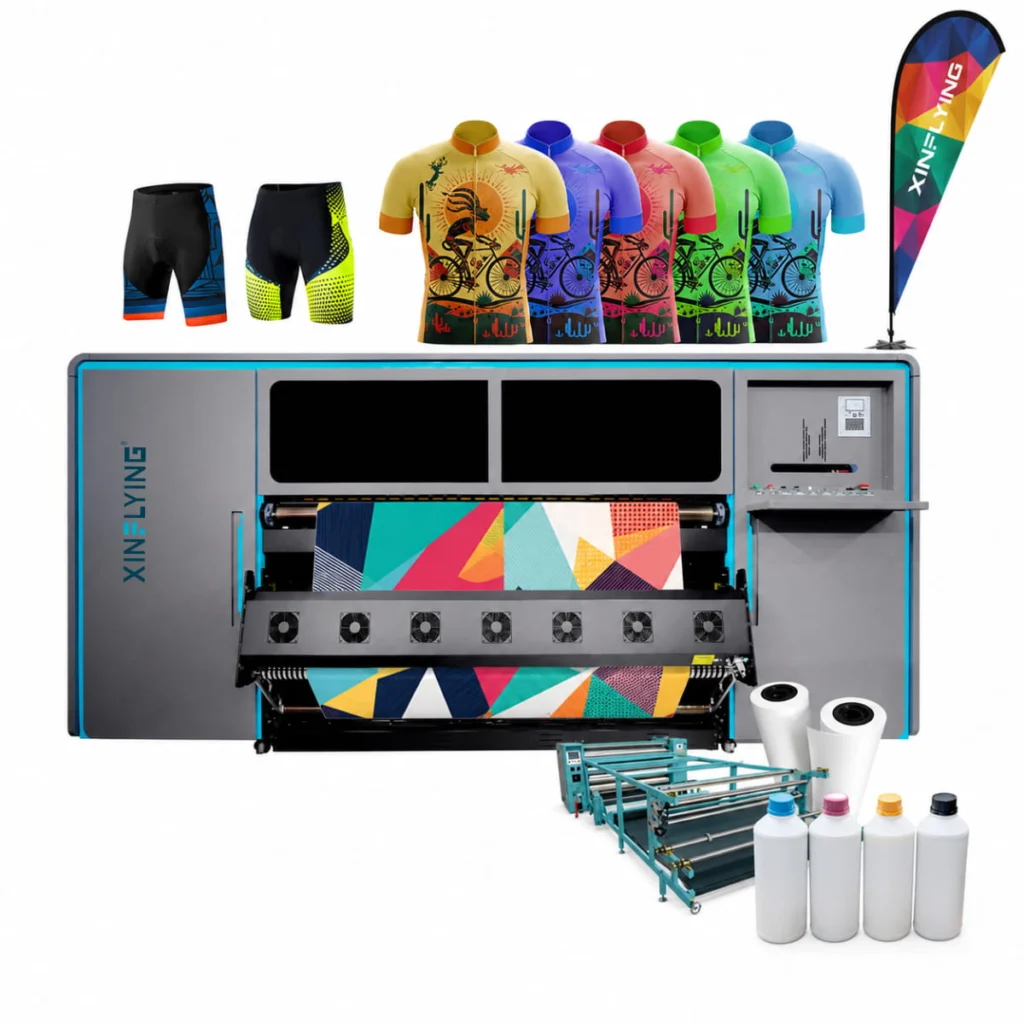
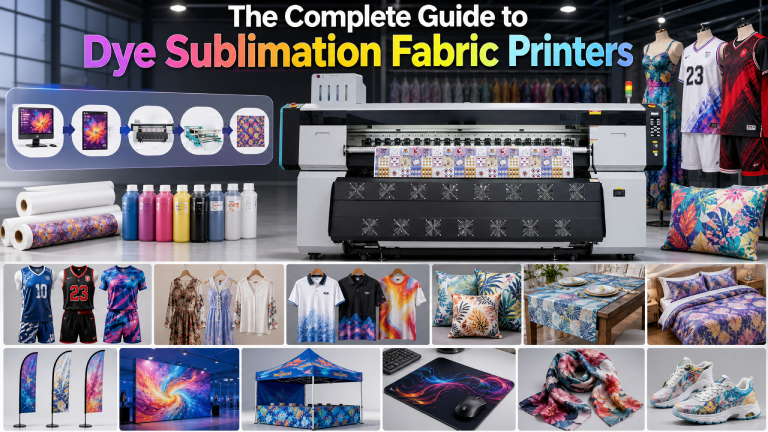
Xinflying Dye Sublimation Printers-19E15PRO
The Xinflying Dye Sublimation Printer-19E15PRO features 15 Epson I3200-A1 printheads for ultra-high-speed printing, delivering vibrant colors and reliable performance for industrial textile production.
Choose DTF if you’re printing on:
- Cotton or blended fabrics
- Dark or black garments
- A mix of fabric types under one product line
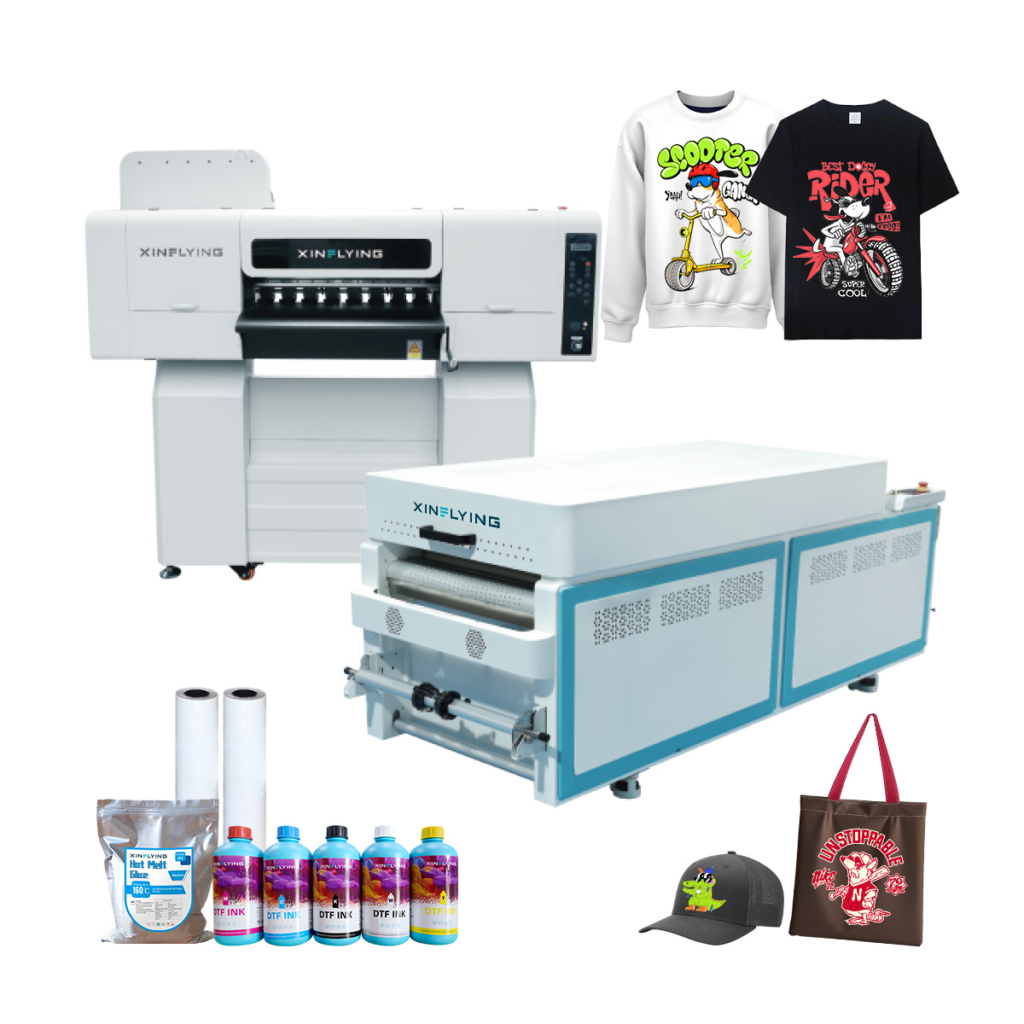
Xinflying DTF Printer Machine-C605-1
The Xinflying DTF Printer Machine-C605-1 is a high-performance 24-inch DTF printing solution designed for professional apparel production, delivering vibrant colors, stable output, and efficient, high-volume printing.
Many shops actually run both — sublimation for their polyester and hard-good lines, and DTF for everything else.
Frequently Asked Questions
No. Sublimation dye chemically bonds with polyester fibers and only works on polyester or poly-coated items. DTF is a printed film transfer that can be applied to nearly any fabric, including cotton and dark colors.
No. Sublimation ink only bonds with polyester, so it won’t transfer properly onto 100% cotton. For cotton, DTF or DTG are better choices.
Sublimation prints generally last the life of the garment since the dye becomes part of the fabric itself. DTF is also durable (50+ washes with proper care) but can eventually show wear at the edges if not applied correctly.
No, DTF is designed for fabric and heat-press application. For mugs, tumblers, and similar hard goods, sublimation is the standard method.
Yes — this is actually one of DTF’s biggest advantages over sublimation, since its white ink base layer allows vibrant color on dark polyester where sublimation would fail.
Sources
- Dye Sublimation Printing Market Report — Grand View Research
- Dye Sublimation Printing Market — Mordor Intelligence
You Might Also Like: